



Google AI Mode ads are now live in ten more countries, and Pakistan is on the list with text ads only. In short, the ad has moved inside the AI answer itself, not just beside it. If you follow AI for SEO in 2026, this is the week the ground moved. By the end of this blog, you will know what changed, who it affects, and what to do this week. Moreover, you will see which claims Google has proven and which questions remain open.
What Google AI Mode Ads Changed on 28 October?
Google announced the rollout on 28 October 2026, through Shashi Thakur, who leads its search ads business. The list of AI Mode ads countries now covers four continents. The ten countries are Australia, Canada, India, Kenya, and Malaysia. New Zealand, Nigeria, Pakistan, the Philippines, and Singapore complete the list. Google also launched multi-turn ads in the United States. As a result, ads can now appear in follow-up answers, not only in the first answer. Every ad carries a Sponsored label, according to Google. For now, the placements are English only, and Google says the list may grow.
AI Mode is the conversational tab inside Google Search, where users ask follow-up questions. Therefore, an ad inside AI Mode sits inside a conversation, not on a results page. Google says AI Mode queries run about three times longer than traditional searches. However, that figure comes from Google itself, not from an independent study. Treat it as a company claim, not as a measured fact.
Longer queries also change how you should think about keywords. For example, a three-word query hides less intent than a full question. Therefore, Google AI Mode ads reward pages that answer complete questions, not pages that repeat short phrases. Moreover, follow-up questions reveal intent step by step, so one conversation can show several buying signals. In short, question-based content becomes more valuable, not less.
For advertisers, the practical point is timing. If your market is on the list, your ads can appear in AI Mode now. If your market is not, watch the fourth quarter announcements closely. Early movers often learn cheaper, because competition is thinner at launch.

Pakistan Gets Text Ads Only, and That Detail Matters
The AI Mode ads Pakistan setup is text ads only, with no shopping listings. In other words, Pakistani users will see text suggestions, not product cards with pictures and prices. Indonesia, by contrast, gets ads inside AI Overviews only, not inside AI Mode. Consequently, advertisers in Pakistan compete on words alone, not on product images. That puts strong ad copy and clear offers at the center of the game.
For a small Pakistani business, this is a low-cost entry point into AI search ads. You do not need product feeds or studio photos to appear. You need a clear headline, an honest offer, and a landing page that loads fast. On the other hand, shopping sellers lose the visual edge they enjoy in other markets. If you sell products, your text must do the work your photos used to do.
Pakistani advertisers should also test ad copy built for questions, not keywords. AI Mode users ask long, conversational questions, so match their language. For example, answer the question in the headline, then support it on the landing page. Finally, track which queries trigger your ads and refine weekly.
Testing matters more than theory in a new placement. First, run one small campaign with question-style headlines for two weeks. Second, compare its cost per click with your standard Search campaigns. However, do not judge the test on clicks alone. For example, a click inside a chat may convert differently than a click on a results page. Consequently, track conversions to the landing page, not just traffic volume.
Your Campaigns Are Already In, Whether You Opted In or Not
In practice, AI Mode advertising needs no new campaign from you. Existing Search, Shopping, and Performance Max campaigns qualify automatically. Google charges no extra fee for these placements, and the auction works the same way. However, you cannot opt out of AI Mode apart from Search itself. That single control matters more than any other detail in this rollout.
You also get no separate targeting for AI Mode placements. Reporting comes in aggregate, so you cannot easily split AI Mode results from the rest. In addition, some ads carry a short explainer written by Gemini. Advertisers cannot write or edit that explainer text. As a result, your ad may appear beside words you did not choose. Check your ad copy for claims that could read badly in a new context. Google leans on Gemini across search now, from explainer s to flagship models like Gemini 4 Carbon.
Small teams should review budgets this week, because a new placement can shift spend quietly. Set a reminder to check Search campaign spend after two weeks. If costs rise without conversions, pause and review before you scale. For example, compare cost per conversion before and after the rollout in your market.

AI Mode Ads Are Not AI Overviews Ads
Many readers mix up two different products, so let us separate them clearly. AI Overviews ads sit above ordinary results, while AI Mode ads sit inside a chat and AI Overviews summarize a search in one block at the top of the page. AI Mode, in contrast, holds a back-and-forth conversation with follow-up questions. The ad rules differ because the experiences differ.
The shift also sharpens the SEO vs GEO debate for every content team. Traditional SEO chases rankings on a results page. Generative engine optimization chases citations inside AI answers. Now, paid suggestions sit beside those cited answers. Therefore, visibility has three layers: rank, cite, and pay. Teams that track only rankings will miss two of the three.
Gemini powers the answers behind both products, and its reach keeps growing. If you use Gemini daily, the Google Gemini free limits in 2026 shape how often you meet these answers. In short, the free tier sets the size of the audience you can reach. Paid plans remove some limits, so check which tier your audience likely uses.
The Money Story Behind the Rollout
Google timed this expansion as its search growth slowed, which tells its own story. Alphabet reported Google Search and other revenue up 12 percent year over year in the third quarter. That was down from 17 percent in the previous quarter. Google said lower monetization of AI Mode searches contributed to the slowdown. In other words, AI Mode answers were popular but not yet paying well.
This is the clearest sign yet that Google AI search ads are moving inside the answer itself. The company plans Brazil, Mexico, and the United Kingdom for the fourth quarter of 2026. No exact date has been given for those three markets. For marketers, the signal is simple: AI answers are becoming ad inventory. Budgets will follow attention, and attention is moving into the chat.
For small teams, the lesson is not about Google’s revenue at all. It is about where attention goes next. When a platform monetizes a surface, that surface usually grows, not shrinks. Expect more AI Mode inventory, more formats, and more competition over time. Early testing now beats rushed catching up later.
Watch three signals over the next quarter. First, watch whether Brazil, Mexico, and the United Kingdom launch on time. Second, watch whether Google adds shopping listings in Pakistan. Finally, watch whether reporting splits AI Mode results from other placements. Moreover, each signal tells you how fast this inventory will grow. Therefore, a short monthly review beats a long yearly plan.
Publishers Have the Sharpest Question
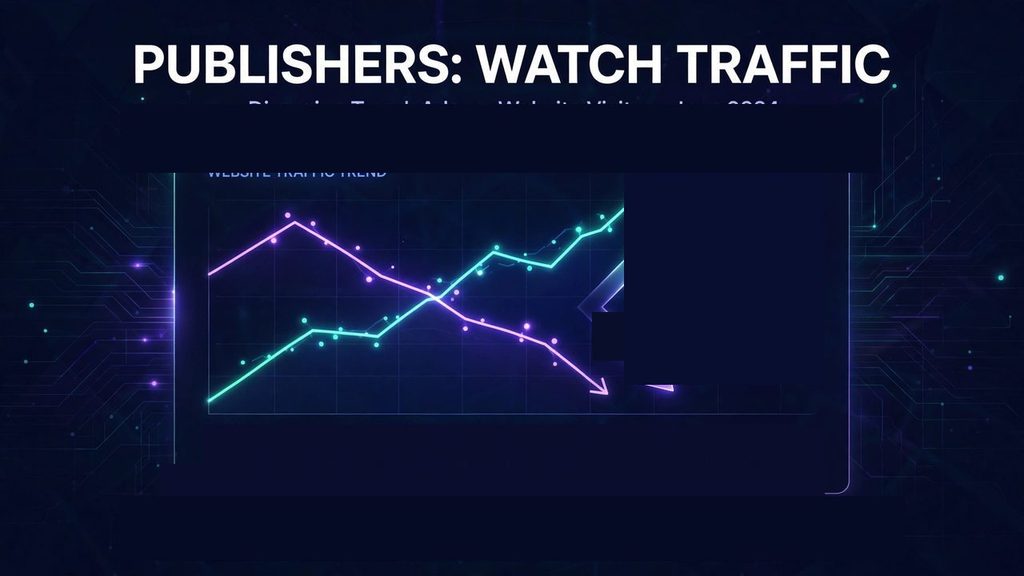
Advertisers gain a placement, but publishers face an open question about traffic. A 2026 working paper by Agarwal and Sen studied 1,065 users in the United States. When AI Overviews appeared, clicks to websites fell by 39.8 percent in that experiment. Ad clicks, meanwhile, showed no measurable change in the same study. However, that study covered AI Overviews, not the new AI Mode ads. Do not treat its number as a forecast for AI Mode ads.
Google has not disclosed AI Mode ad revenue, user counts, or referral effects. Its internal comparison of sponsored and organic product clicks covers 20 August to 3 September 2026. That comparison does not measure clicks to publisher websites. Moreover, Google says paid ads do not influence the organic AI answer. No independent audit of that claim has been identified in the sources for this blog. Publishers should therefore watch their own referral data closely.
If you run a content site, compare search referrals before and after the rollout in your market. Watch AI Mode availability in your country and note the date it arrives. Build direct channels too, such as email lists and loyal readers. A site that depends on one traffic source is fragile by design. In addition, original reporting and first-hand experience still earn citations best.
Citations still matter more than ever for publishers. Pages with clear facts, original quotes, and direct answers get cited most. Update old posts, add sources, and cut filler that helps no reader. In short, write for the answer, not only for the ranking.
Measurement is the practical answer to publisher anxiety. First, record your search referrals for the four weeks before AI Mode ads arrive in your market. Second, record the four weeks after, using the same reports. However, compare like with like, because seasons and news cycles also move traffic. For example, a holiday spike can hide a real referral drop. As a result, note major events beside your numbers before you draw conclusions.
5 Moves for Small Teams This Week
First, audit your Search, Shopping, and Performance Max campaigns today. You are already eligible for AI Mode placements, so check what could appear. Remove weak headlines and any claim you cannot defend in an AI answer. For example, a vague superlative can look worse beside a factual answer.
Second, set a simple tracking habit for AI visibility. Tools in the best GEO tools for 2026 roundups help you watch citations across AI answers.
Compare the Semrush AI Visibility Toolkit vs Ahrefs Brand Radar before you pay for either.
A Profound vs Peec AI comparison can also clarify which tracker fits a small budget. Pick one tool, not three, and check it weekly.
Build a Smarter AI Visibility and SEO Strategy
Third, learn how to rank in ChatGPT and similar answers, because the same skills transfer. Clear structure, direct answers, and cited facts help AI systems quote you.
A ChatGPT rank tracking tool can show whether your pages get cited at all. If no page gets cited, fix content depth before you spend on ads.
Fourth, review your tool stack before you add anything new. A Semrush vs Ahrefs vs Moz vs Ubersuggest comparison shows where each tool wins.
If cost is the barrier, Ahrefs alternatives cover most small-team needs.
On your site, a Rank Math vs DefiniteSEO AI comparison can guide your on-page setup.
And if you collect search data at scale, read up on proxies for SEO first.
Fifth, protect your time with better workflows. Small teams win by shipping steadily, not by buying every tool. For instance, the HIX AI Workspace 2.0 approach bundles brand kits and scheduling in one place.
More broadly, AI and automation for small business works best when one person owns the workflow. Finally, keep one direct channel, such as email, that no platform can throttle.
Finally, remember that AI tools for SEO support your strategy, they do not replace it. Tools surface data, but judgment still turns data into decisions. Review results monthly, cut what fails, and double down on what converts.
FAQs
Are Google AI Mode ads live in Pakistan?
Yes. Pakistan is among the ten new countries, with text ads only and no shopping listings.
Do I need a new campaign for AI Mode ads?
No. Existing Search, Shopping, and Performance Max campaigns qualify automatically, with no extra fee.
Can I opt out of AI Mode ads only?
No. Google offers no separate opt-out for AI Mode apart from Search itself.
Are AI Mode ads the same as AI Overviews ads?
No. AI Overviews ads sit above ordinary results, while AI Mode ads sit inside a chat conversation.
Will AI Mode ads hurt publisher traffic?
That is unproven. A 2026 study found a 39.8 percent click drop for AI Overviews, but it did not study AI Mode ads.
Conclusion: The Answer Is the New Ad Slot
Google AI Mode ads mark a clear shift: the answer itself is now ad inventory. Advertisers get reach without new campaigns, but they lose some control. Publishers gain uncertainty, and small teams gain a cheap entry point in Pakistan. In short, the winners will be teams that track AI visibility and build direct channels. Start with the five moves above, and review your numbers in two weeks. Then decide where your budget earns its keep. If this blog helped you, share it with one marketer who still plans search the old way.


[…] addition, the launch connects to a wider shift in AI search and discovery. Our earlier guide on Google AI Mode Ads going global shows how AI answers now shape what customers see first, and the same lesson applies here. […]