
SEO vs GEO is the question every content writer is asking right now. Search habits are shifting fast. So people still Google things, sure, but they also ask ChatGPT, Perplexity, and Gemini for answers. Then where does that leave your content strategy? Honestly, this shift surprised me too. I spent years chasing rankings on page one. Now I’m also checking if AI tools even mention my client’s brand at all. That’s the real story behind SEO vs GEO. This guide breaks down both, in plain words, with real examples you can use today.
What Is SEO, Anyway?

SEO stands for search engine optimization. It’s the practice of shaping a page so Google, Bing, or any search engine ranks it higher. So that means keywords, back links, site speed, and clean structure. You’ve probably done some of this already, even by accident. Good headlines help. Fast load times help too. Internal links matter as well. SEO has one clear goal: get a human to click your link and land on your page. That click has been the whole game for over twenty years. Now, though, a second kind of reader has entered the picture.
What Is GEO, and Why Everyone’s Talking About It?

GEO means generative engine optimization. It’s newer, and it’s built for a different kind of reader: an AI model. When someone asks ChatGPT a question, the model pulls information from many sources and writes one answer. So GEO is about making sure your content gets picked as one of those sources. There’s no click involved most of the time. Instead, the user just gets an answer, often with your brand mentioned by name.
Think of SEO vs GEO like this: SEO gets you a spot on the shelf. Meanwhile, GEO gets your book actually read aloud by the librarian. And these days, that librarian is an AI. Sounds strange, right? Honestly, it felt strange to me too, the first time I noticed it happening. A fellow writer once told me, “SEO earns you a seat. GEO earns you the microphone.” That line has stuck with me ever since.
SEO vs GEO: A Quick Comparison
| Factor | SEO | GEO |
|---|---|---|
| Main goal | Rank in search results | Get cited in AI answers |
| Success metric | Clicks and rankings | Mentions and citations |
| Core tools | Keywords, backlinks, speed | Clear facts, structure, authority |
| Where it shows up | Google, Bing results pages | ChatGPT, Perplexity, AI Overviews |
| Content style | Optimized for scanning | Optimized for extraction |
That table alone should make the SEO vs GEO gap easier to picture. Still, the two aren’t enemies. They actually feed off each other more than people admit. Neither one works well fully alone anymore, not in 2026.
Read more: The Ultimate Guide to Workflow Builders You Actually Need in 2026
Quick Differences Worth Remembering
Before you decide where to spend your time, look at a few small but important gaps between the two approaches. Here’s what tends to separate them in daily practice:
- Back links drive SEO rankings, while clear facts drive GEO citations
- Google Analytics tracks SEO traffic, but GEO impact stays harder to measure
- Long pages often help SEO, whereas short, direct answers help GEO
- Page rank matters most for SEO, and trust matters most for GEO
- Clicks define SEO success, yet many GEO users never visit your site at all
Notice how GEO keeps rewarding clarity over cleverness? That’s the part most writers miss. One content strategist put it well. “If a page can’t be summed up in one line, AI won’t summarize it.” That stuck with me. It’s blunt, but it’s true.
Why You Still Need Both (SEO vs GEO)?
Here’s the thing. Google still handles about 14 billion searches a day. Meanwhile, ChatGPT handles a much smaller slice of that traffic. So, SEO isn’t dying anytime soon. But GEO is growing, and fast, especially since 2025. A friend of mine runs a small bakery website. She ranked well on Google for years. Then she noticed AI Overviews were answering baking questions using a competitor’s recipe page instead of hers. She hadn’t touched her content structure in ages. That’s when she called me, honestly a bit panicked.
So, we didn’t throw out her SEO work. Instead, we added clear definitions, short answer blocks, and simple tables, the exact things GEO rewards. Within two months, AI tools started citing her site again. SEO vs GEO isn’t a war you have to pick a side in. It’s more like running two engines on the same car. Skip one, and the whole thing slows down.
A marketing consultant summed it up nicely once. “Ranking gets you found. Being cited gets you trusted.” That’s a fair way to describe the shift happening right now, and it’s only speeding up.
How to Actually Improve Your GEO Score?
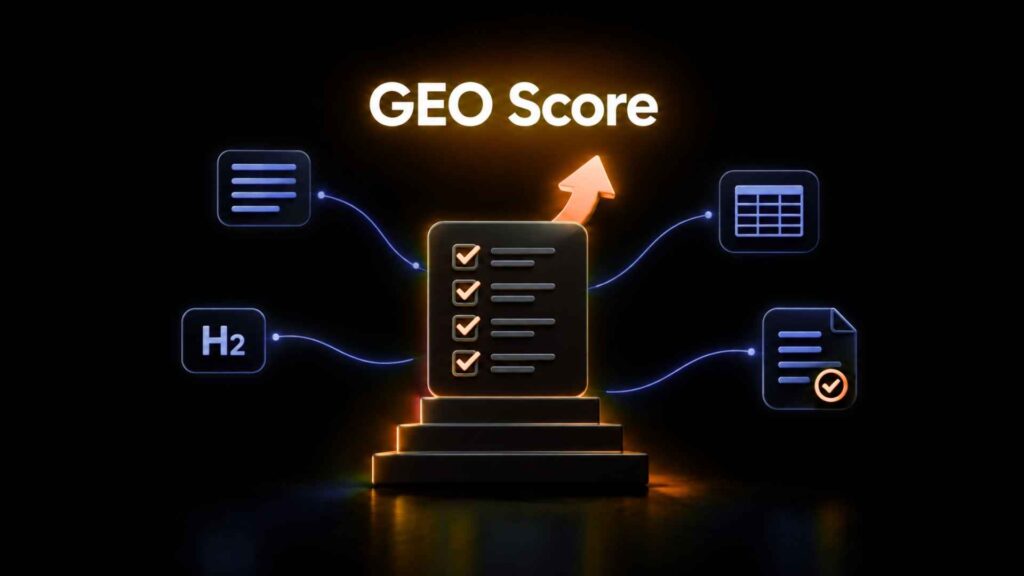
You don’t need a huge budget to start. Focus on structure and clarity first, before anything else.
- Write short, direct answers near the top of each section
- Use clear headings that match real questions people ask
- Add tables and lists, since AI models extract them easily
- Back up claims with real numbers, dates, or sources
- Keep sentences short; long, winding paragraphs confuse extraction tools
Sound familiar? A lot of these steps overlap with basic good writing. That’s not really a coincidence. Good writing has always rewarded clarity, and GEO just makes that reward more visible now.
Read more: Google Assistant vs Gemini: Which Is Better?
The Numbers Behind This Shift
Here’s something worth knowing. Some estimates put AI-powered searches at a small but fast-growing share of all search traffic today. That number was closer to zero just two years ago. So, the pace matters more than the current size. On top of that, engagement from AI-driven visits often looks different too. Visitors who arrive after reading an AI summary tend to already understand the topic. That means they convert at a higher rate once they do land on a page. Plus, they usually skip straight to the decision stage instead of browsing casually. This is exactly why marketers now watch SEO vs GEO data so closely. Measurement gaps still exist, sure, but the trend line is hard to ignore.
SEO vs GEO: Metrics You Should Track
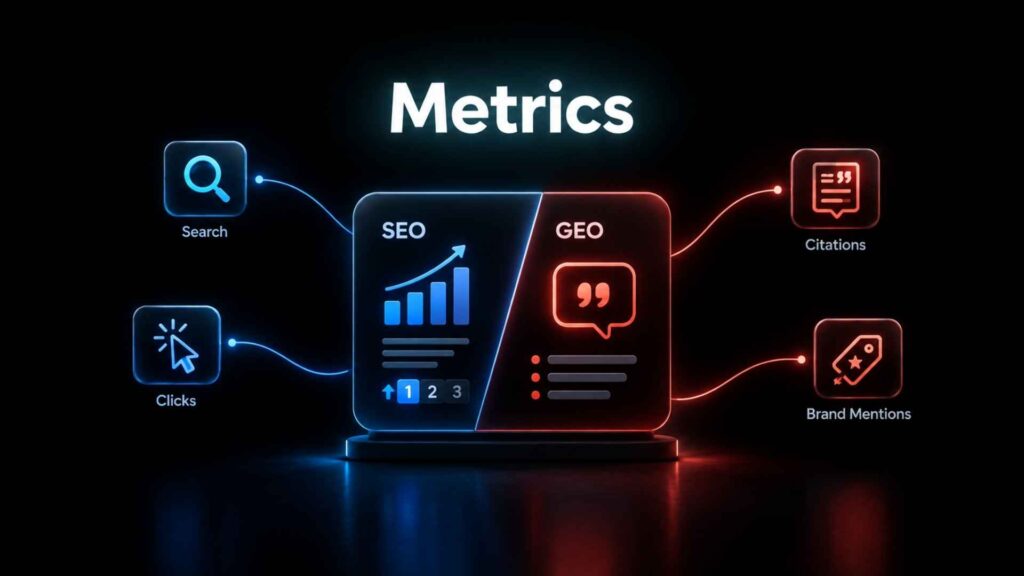
| Metric | SEO Focus | GEO Focus |
|---|---|---|
| Rankings | Position 1 to 10 | Not directly tracked |
| Citations | Not applicable | Brand mentions in AI answers |
| Click-through rate | High priority | Often irrelevant |
| Brand recall | Secondary goal | Primary goal |
| Content format | Articles, guides | Definitions, FAQs, tables |
Ever tried tracking AI citations yourself? It’s messier than checking Google Search Console, that’s for sure. Tools for this are still catching up, so expect some manual checking for now. A few newer platforms are trying to close that gap, but none of them feel complete yet.
A Confession Worth Sharing
I’ll be honest, I got this wrong the first time. I assumed GEO meant stuffing more keywords into intros. Actually, that’s backwards, and it took me a while to admit it. GEO rewards fewer, sharper sentences over keyword density. Once I rewrote a client’s guide with shorter answers and one clear table, AI mentions doubled within a few weeks. That single mistake taught me more than any course ever did.
Read more: SEO Content Writing Freelance Made Simple: Everything You Need to Know
💢Common Mistakes to Avoid
A GEO researcher once warned me, “Treat AI models like a strict editor, not a search box.” Writers often confuse the two and treat them as one task. They aren’t the same thing, not really. Some skip structure entirely, hoping length alone will win. Others ignore data points, which AI models love to quote. So avoid vague claims without real numbers. Also skip the habit of burying your main answer under three paragraphs of fluff. Keep your best line near the top, always, no matter how tempting a long intro feels. Then check your work with a fresh set of eyes before publishing. Honestly, a quick read-aloud test catches most of these problems fast.
Conclusion
SEO vs GEO isn’t about picking a winner. Both matter, just for different readers, one human and one machine. SEO still drives most traffic today. Meanwhile, GEO decides whether AI tools trust your brand enough to quote it. The smartest content writers I know are doing both now, not one instead of the other. So start small: add one table, tighten your intros, and back up your claims with real numbers. That’s really all it takes to begin, and you can build from there over time. Look, nobody gets this perfect on the first try, and that’s fine.
Need help with your SEO vs GEO strategy? Contact us today and let’s build a plan that works for both.
Frequently Asked Questions
1. What does SEO vs GEO actually mean in simple terms?
SEO means ranking on search engines like Google. GEO means getting cited inside AI-generated answers instead.
2. Is GEO replacing SEO completely?
No, not yet, and probably not soon. Search engines still handle billions of daily queries. GEO adds a new layer on top of SEO.
3. Do I need special tools for GEO?
Not really, at least not yet. Clear writing, tables, and facts do most of the work already.
4. How long until GEO changes show results?
Some writers see AI citation shifts within a few weeks. Others take a couple of months, depending on the niche.
5. Can small websites compete in the SEO vs GEO race?
Yes, actually smaller sites can win here. AI models often favor clear, specific answers over big brand names.
6. Should I stop focusing on keywords altogether?
No, keywords still matter for SEO rankings. Just don’t stuff them; clarity always wins over repetition.

2 Comments
Pingback: GPT-6 Astra: Everything You Need to Know Before You Buy It
Pingback: Micro1 AI Interview: 5 Mistakes That Kill Your Chances