


Gemini 4 Carbon is Google’s strongest AI model yet, and you cannot use it. Google announced it on October 28, 2026, with top scores in cybersecurity and long horizon coding. However, access starts with a small group of cyber defenders, and no public date exists for everyone else. This guide explains the benchmarks, the price, and the honest catches behind the headlines. By the end, you will know whether to wait, prepare, or look elsewhere.
This blog separates Google’s claims from what you can actually buy today. For example, the price looks low now, but it doubles later. Therefore, read the access rules before you plan a project around Carbon.
What Is Gemini 4 Carbon?
Gemini 4 Carbon is Google DeepMind’s newest frontier model. In the official announcement, Google calls it the strongest model it has built so far, with state of the art cybersecurity and long horizon skills. It arrived on October 28, 2026, just two weeks after Gemini 4 Argon. Google positions it for work that runs for days, not minutes. For example, it can hunt bugs across a large codebase, test whether flaws can be exploited, and draft fixes. It targets security teams and engineering teams first, not casual chat users.
Carbon builds directly on Gemini 4 Argon, so the two names cause confusion. Argon launched two weeks earlier as the base for the Gemini 4 generation. Carbon extends that base for finding, proving, and fixing flaws. If you want the full Argon story first, read our Gemini 4 Argon explained guide, because it sets up everything Carbon changes. Do not treat the two models as the same product. Argon reached a wider audience, while Carbon starts behind a closed door.
Carbon is also a closed, proprietary model, which matters for buyers who value control. You cannot download its weights, inspect them, or run them on your own servers. On the other hand, open weight models like Mistral Large 4 let teams download and run the model themselves. Carbon suits teams that accept Google’s cloud and rules, while open models suit teams that need full control.
Gemini 4 Carbon Benchmarks: What Google Leads With?
The headline number is 59 on the Artificial Analysis Intelligence Index v5.0, which puts Carbon at number one. Google reports that score ahead of Claude Opus 5.5 at 58 and GPT-6 Astra at 57. The median for comparable models sits at 38, so the gap looks large. This index version is brand new, and it launched on the same day as Carbon. Treat the number one rank as a strong start, not a settled verdict. For context on one rival, see our GPT-6 Astra coverage, because it shows how fast this leaderboard changes.
What Makes Gemini 4 Carbon Stand Out in Benchmarks?
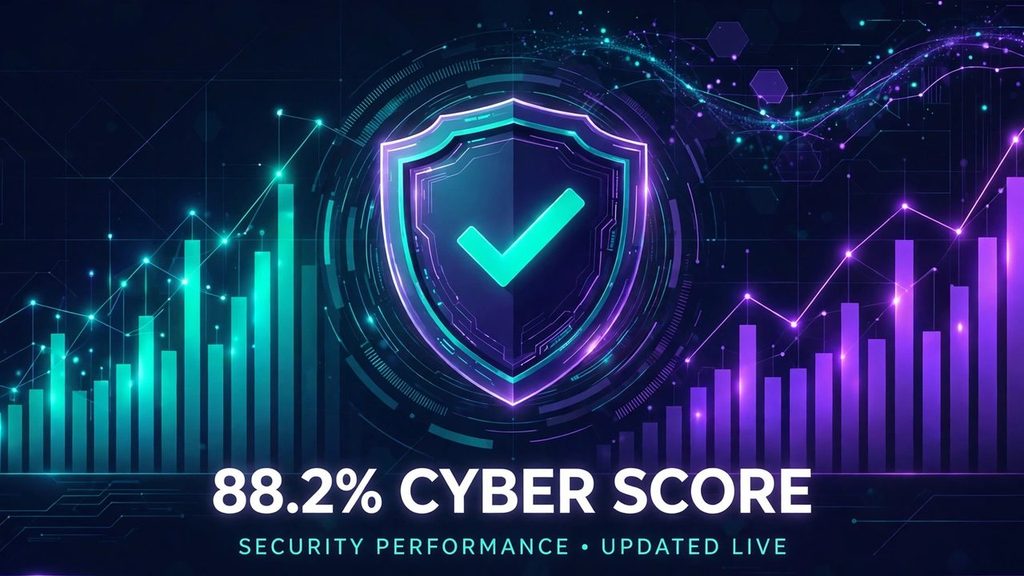
The Gemini 4 Carbon benchmarks look strongest in cybersecurity, and that focus is deliberate. Google reports 88.2% on SEC-bench Pro, which tests finding real vulnerabilities in software. It reports 54.8% on ExploitGym, which tests turning a flaw into a working exploit. The model covers both discovery and validation, not just one side. The third score is 71.0% on CWE-bench, which grades patching flaws at the root cause.
Secure code generation is the second headline, and Google frames it as a practical win. Internal tests show more than twice the secure code success rate of Argon. The Chrome team reports more than 10 times better patch generation than another lab’s frontier model. However, both claims come from Google’s own tests, not independent labs. Treat them as promising signals, not proof. For a comparison of agent coding workflows, see our Claude Duet coverage, because it shows what agent tests should measure.
Safety numbers round out the benchmark story, and they look strong on paper. Google reports a 0.0% attack success rate on the Grey Swan prompt injection benchmark. High severity misalignment alerts fell by about 80% against the predecessor. The model looks harder to trick and more careful with claims. Unsupported claims also fell by about half, which matters for reports and audits. Security teams can compare this approach with our Microsoft Guardian Agents coverage, because it shows another way to build guarded agents.
One caveat changes how to read every number above. Google states that its external cyber benchmarks were evaluated without guardrails. The model faced the tests with no safety filters in place. Real deployments will run with filters on, so live results may differ. The scores show raw capability, not production behaviour. Independent coverage of the launch also notes that Carbon trails rivals on a couple of coding tests, so the lead is not total.
Long Horizon Coding: Work That Runs for Days
Long horizon coding is Google’s other big claim, and it means work that runs for days. Internal teams watched Carbon work on large codebases for days straight. Google says the model sustains agent workflows across many steps without losing the thread. It suits multi day refactors, migrations, and security reviews. To understand agent workflows in plain terms, read our AI agents explained guide, because it breaks down how these systems work.
Google reports 96.2% on its GraphWalks evaluation over inputs from 256,000 to 1 million tokens, against 84.2% for Argon. That range describes the test, not a confirmed API context window. In addition, Google has not published a context limit for Carbon at all. Do not plan a one million token workflow until Google confirms the limit. Teams that run long agent projects today can see our HIX AI Workspace 2.0 coverage, because it shows how agent workspaces handle long tasks.
Web development is the one place where Carbon does not lead, and honesty requires saying so. Google reports 1,768 Elo on WebDev Arena, ranked fourth, after a gain of 89 points. Carbon ranks second to Claude Opus 5.5 on the Artificial Analysis Coding Agent Index. The model is elite for security and long tasks, but not the best at everything. For example, a team that builds marketing sites may find a better fit elsewhere. Match the model to the job, not to the headline rank. Claude family pricing context helps too, as our Claude Haiku 5.5 pricing and benchmarks coverage shows for a related Claude model.
Gemini 4 Carbon vs Argon: What Actually Changed?
Gemini 4 Carbon vs Argon is the comparison every buyer asks about, and the gap is real but narrow. Carbon builds on Argon, so it shares the same safety and security stack. It adds stronger long horizon skills and much stronger cyber results. For example, secure code success more than doubled, and GraphWalks jumped by 12 points. Carbon now holds the number one index rank in the updated index. Speed fans should note a different trade off, as our Mercury 3 coverage shows how a diffusion model changes latency for real time work.
The price did not change at launch, which is a rare piece of good news. Both models launch at the same introductory rates, so early Carbon users pay Argon prices. However, the later rates double, and Google gives no end date for the intro period. Therefore, the upgrade looks free now and costly later. Teams should budget at the later rates from day one, as the price section below explains.
Gemini 4 Carbon Access: Defenders First, Everyone Else Waits
Gemini 4 Carbon access is the story, because it breaks the usual launch pattern. Google will make Carbon available to a subset of cyber defenders first, starting in the announcement week. In addition, access will expand gradually to trusted partners through the Fairwind Program. However, developers, businesses, and consumers get no date at all. Therefore, most readers cannot try Carbon today, no matter how strong the scores look. Staged launches are common in this market, as our MiniMax M3.1 Flash review shows for another recent model debut.

The Fairwind Program restricts access to vetted defenders, and it permits defensive work only. Authorized uses include threat simulation, reverse engineering, malware analysis, and defensive research. However, malicious use and redistribution are not permitted under the program. In addition, Google says it is engaged in the United States government’s voluntary process for pre-release model testing. Therefore, the staged rollout is a safety choice, not just a marketing tactic. Open models follow a different path, as our DeepSeek V4.1 Flash coverage shows for a widely available rival.
No public API model ID exists for Carbon yet, which is the clearest sign of the limit. Developers cannot call the model through a standard API today. In addition, independent trackers disagree on API availability, so treat Carbon as not callable yet. As a result, any tutorial that claims a working Carbon API call deserves doubt. Independent coverage of the launch confirms the same limit, with no date for general availability.
Gemini 4 Carbon Price: Cheap Now, Double Later
The Gemini 4 Carbon price starts low, and that low number needs context. Introductory pricing is $2 per million input tokens and $10 per million output tokens. In addition, cached input tokens cost 95% less than the input rate. However, output tokens still dominate the bill for long reports and code. Therefore, the headline $2 rate is only part of the true cost. Pricing lessons from other launches apply here too, as our Kling 4.0 coverage shows for budgeting at full rates.

Later rates rise to $4 per million input tokens and $20 per million output tokens. Google gives no end date for the introductory period, so teams cannot plan around it. In addition, the later output rate doubles the cost of long agent runs. As a result, a budget built on intro rates will break when the period ends. Therefore, plan every project at $4 and $20 from the start. For help choosing tools within a budget, see our best AI tools in 2026 guide, because it compares options by value.
Value depends on token efficiency, not just the rate card. A model that needs fewer tokens per task can cost less even at a higher rate. However, Google has not published Carbon token efficiency figures for common tasks. Therefore, buyers cannot compute true job costs yet. For example, a security review that needs 10 million output tokens costs $100 at intro rates and $200 later. As a result, long horizon work gets expensive fast, and teams should test short pilots first. Independent pricing coverage lists the same intro and later rates for Carbon.
The Honest Catches Nobody Should Skip
The first catch is the fresh index behind the number one rank. Version 5.0 of the index launched on the same day as Carbon, with two new benchmarks and easier questions removed. In addition, the score comes from Google’s announcement, not a full independent breakdown. Therefore, the rank is real but young, and it needs time to settle. Rival open models also keep improving, as our GLM-5.3 Flash coverage shows for a fast moving competitor.
The second catch is the missing paperwork. Google has not published a Carbon model card, a context limit, a parameter count, or an architecture description. In addition, the safety report linked from the announcement covers Argon, not Carbon. As a result, buyers must trust the announcement for safety claims. Therefore, regulated teams should wait for Carbon specific documents. Comparison habits matter here too, as our Grok vs ChatGPT comparison shows for checking claims before you trust them.
The third catch is the test condition itself. External cyber benchmarks ran without guardrails, so the scores show raw skill, not filtered behaviour. However, production use will add filters, and filters change results. Therefore, expect a gap between benchmark scores and live performance. As a result, the honest summary is narrow: best for defense and long security work, not best at everything.
Who Should Wait? Who Should Prepare? and What to Do Now?
Security teams with Fairwind access should test Carbon now on real defensive work. In addition, measure accuracy and cost for two weeks before wider use. However, teams without access should not pause their security work while waiting. Therefore, keep current tools running and treat Carbon as a future upgrade. For a model comparison habit, see our GPT-6 Astra vs Claude Fable 5.1 coverage, because it shows how to judge rivals side by side.
Developers should prepare by testing Argon today, since Carbon builds on it. For example, learn the Gemini 4 workflow, prompt patterns, and safety stack now. In addition, design agents that can switch models later without a rewrite. As a result, the team can adopt Carbon fast when access opens.
Small teams and freelancers should look elsewhere for immediate needs. Carbon offers no path for a solo builder today, and no date exists for one. For example, demand the same cyber and secure code evidence from any model you buy. Therefore, use Carbon’s bar as a shopping standard, even if you never touch Carbon itself.
FAQs
What is Gemini 4 Carbon?
Gemini 4 Carbon is Google DeepMind’s strongest frontier model, announced on October 28, 2026. It focuses on cybersecurity defense and long horizon coding work. However, it is a closed model, so you cannot download or self host it. Access starts with selected cyber defenders only.
When can developers use Gemini 4 Carbon?
No date exists for general developer access. Google says access will expand gradually through the Fairwind Program to trusted partners. Therefore, developers should watch for Fairwind expansion news, not a fixed launch day.
What is the Gemini 4 Carbon price?
Introductory pricing is $2 per million input tokens and $10 per million output tokens, with cached input at 95% off. Later rates rise to $4 and $20, with no end date for the intro period. Therefore, budget at the later rates from the start.
How does Gemini 4 Carbon compare with Argon?
Carbon builds on Argon with stronger cyber and long horizon results. For example, secure code success more than doubled, and GraphWalks rose from 84.2% to 96.2%. However, both models share the same safety stack and the same introductory price. Therefore, Carbon is an upgrade in skill, not a new product family.
Is Gemini 4 Carbon the best AI model overall?
It ranks number one on the updated Artificial Analysis Intelligence Index at 59, but that rank has limits. The index version is new, the score comes from Google, and Carbon trails rivals on some coding tests. Therefore, call it the best for defense and long security work, not the best at everything.
Conclusion: A Number One With a Locked Door
Gemini 4 Carbon earns attention for a simple reason: it leads the newest index and dominates cyber tests. However, the model behind those numbers stays out of reach for most readers. Access starts with defenders, the price doubles later, and key documents are still missing. Therefore, the smart move is preparation, not purchase. Test Argon, harden your agent workflows, and budget at full rates, so Carbon helps you on day one when the door opens.
If you found this guide useful, share it with a developer or security lead who is tracking new models. In addition, keep watching AiBlitzo, because we will update this guide when Google opens wider access or publishes Carbon documents. For now, judge Carbon by its evidence, not its headlines, and spend your budget on tools you can actually use today.


[…] your region before you promise a client a delivery date. Google’s flagship language model, Gemini 4 Carbon, arrived a week earlier, and our Gemini 4 Carbon guide explains why it stays limited to cyber […]
[…] also made Gemini 4 Carbon widely available on November 10, calling it the strongest model for long agent […]