


The short version is simple: AI searchability is how often AI search mentions your brand. When someone asks ChatGPT or Google a question in your field, does your brand show up in the answer? That, in short, is the whole test.
In fact, ChatGPT alone reaches 1.2 billion weekly users. That number still shocks me, and it should shock you too. Answers replace links more each month, so the brands that get cited win the click. I will show you what it means, how to check it today, and how to improve it with five simple steps.
What AI searchability actually means?
It means AI engines know your brand and name it in answers. That is it. First, mentions: your brand name appears in AI answers. Second, citations: the answer links to your site as a source. Third, recall: the model names you without a prompt that leads it there.
Together, these three signals show whether AI engines know you exist. Brands with strong ai searchability get named, linked, and trusted by the engines that answer questions.
Mentions are not the same as rankings
A rank is a position on a results page. A mention is a place inside an answer. For example, your page can rank third and still never appear in the AI Overview above it. The Overview picks a small set of sources and skips the top ranked page. That gap is the problem with old SEO reports. They track positions, but answers now decide who gets seen.
Trust sits under all three signals. I think of it as the foundation. AI engines quote sources they can check, so a clear author, a real company, and consistent facts all help. Our guide to E-E-A-T explains the trust signals, and they feed your visibility in AI answers too. In short, if a human would trust your page, an AI engine is more likely to cite it.
AI searchability vs SEO: what changes and what stays the same?
SEO still matters, but its job has changed. It used to end at the click. Now the answer is the prize, and the click is a bonus. Rankings still feed AI answers, so the old work is not wasted. However, the goal has moved from position one to mention one. That shift changes what you measure and fix. Our SEO vs GEO guide explains the shift in full.
What stays the same?
Good pages still win. Clear facts, fast load times, and honest content still matter. The difference is the finish line. In the past, you wanted the top blue link. Today, you want the quote inside the answer. For example, a page that answers one question well can get cited while it ranks fifth. That is the new shape of ai searchability. I love that part.
The skills transfer, too. Keyword research still tells you what people ask. Content briefs still shape clear answers. And our AI for SEO guide for 2026 shows how the same habits now serve AI answers and search results. So you do not need a new team. In the end, you need the same team with a new scoreboard.
How to check your AI searchability today?
You can check your ai searchability in one free hour, no tool needed. Ask ChatGPT, Gemini, and Perplexity the exact questions your customers ask, and write down which brands appear. Then run the same questions in Google and read the AI Overview at the top. What you see there is the truth about where you stand right now.
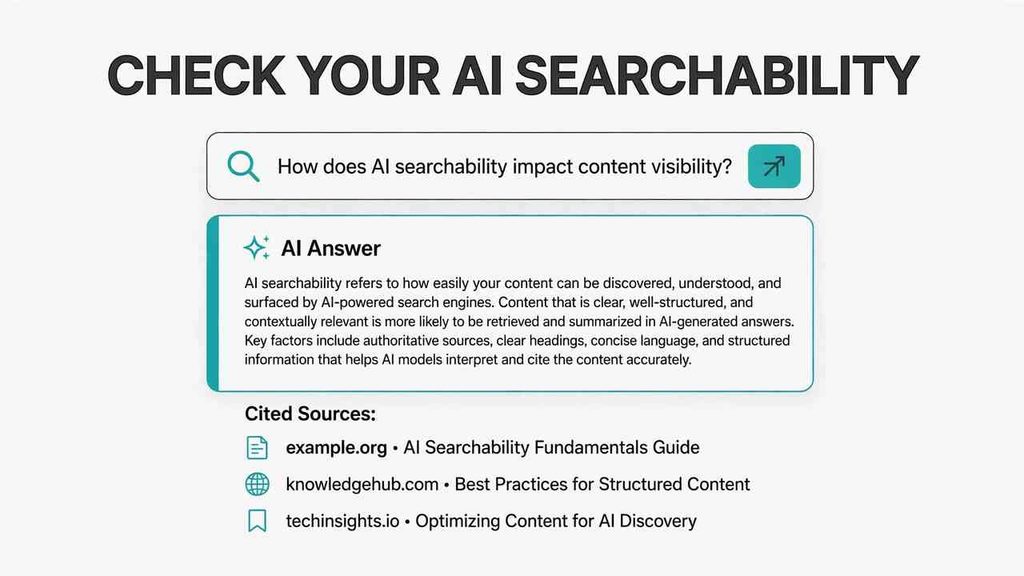
Ask the engines directly
First, I start with five to ten customer questions. I ask each one in ChatGPT Search and note whether my brand or my site shows up. OpenAI explains how ChatGPT Search works, and the point is simple: it cites pages it can read. Then I repeat the test in Gemini and Perplexity and write down the pattern. If rivals appear and you do not, you found your gap.
Watch AI Overviews and AI Mode
Google now shows AI Overviews above the classic results. AI Mode ads are scaling to ten more countries, with up to four ads in one answer. And AI Overviews started to replace the brand knowledge panel on desktop brand searches in late October. That means a searcher may read an AI answer about you and never reach your site. The answer matters more than the link now.
What to look for?
Check your brand name and your top product questions in Google. If the Overview names rivals and skips you, your visibility needs work, so that is where you start. If you run a business, claim your ChatGPT profile, since that profile feeds the answers people see.
I never guess at this part. Google documents how its AI features choose sources, so I read that page first and check my pages against it.
News moves fast here. Our latest AI updates roundup covers the newest launches each week, so check it before you trust an old guide.
AI Visibility Tracker Tools: What They Measure and What They Miss?
An ai visibility tracker asks AI engines the same questions each week and records when your brand appears. It turns a manual check into a trend line, and that trend is the point. A single mention means little. But a rising share shows your work is landing. For example, one answer in ten this month and three in ten next month tells you plenty.
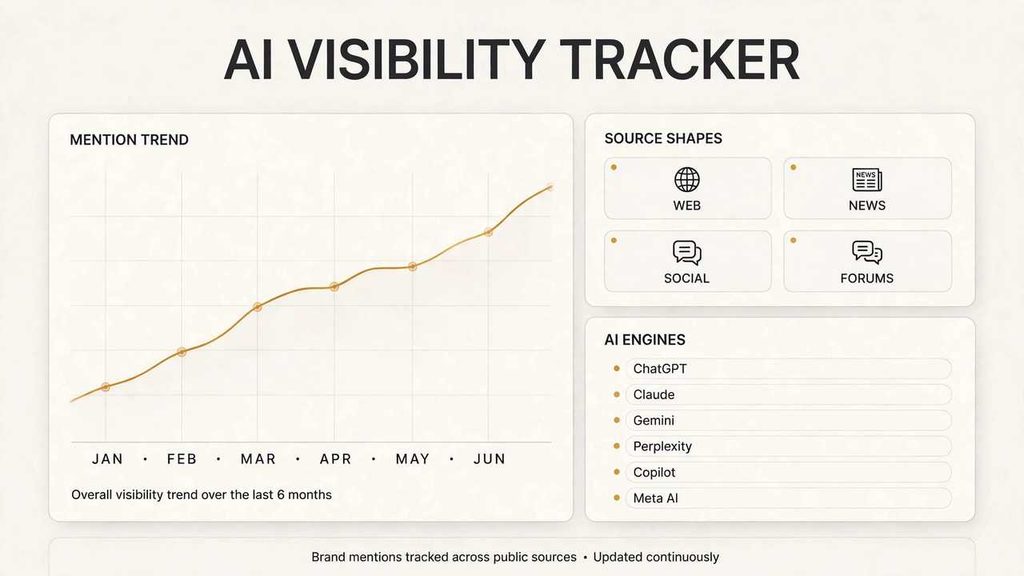
Two well known tools in this space are Profound and Peec AI. Profound tracks how often AI engines mention your brand, and it also shows the trend over time.
Peec AI does similar work. Its survey of 700 marketing decision makers found that 89 percent raised AI search spend over the past year. Big spend, in other words, and most of it is still flying blind.
Yet only 24 percent can show what the channel returns. So that gap is why you should track mentions before you raise spend. See our Profound vs Peec AI comparison for the side by side detail.
What trackers miss?
No tracker sees everything. Each tool asks its own set of prompts, so two tools can report different scores for the same brand. AI answers change daily, and a weekly check can miss a short spike. I treat the trend in my ai searchability as the truth, not one single score. And I check the vendor page for the current price before I buy, since plans change often.
Bigger teams also compare full tool-kits. Our Semrush AI Visibility Toolkit vs Ahrefs Brand Radar comparison shows how two leading suites track brand mentions in AI answers.
SEO ranking tools still matter: rankings, clicks, and the pages AI quotes
Rankings still feed AI answers. Google builds its AI Overview from pages it already trusts, and those pages usually rank well. So seo ranking tools still earn their place. They show which pages rank, which ones slip, and which ones get clicks. That data tells you where to fix content first. Our AI tools for SEO guide lists the tools that help with this work.
Use rank data with mention data. A page that ranks first but never gets cited has a clarity problem. A page that gets cited but ranks low has a trust problem. In both cases, the fix starts on the page itself. That is why ai searchability and classic SEO share the same base: clear, honest pages that answer real questions.
First, compare the suites before you pay. Our Semrush vs Ahrefs vs Moz vs Ubersuggest guide breaks down the main options.
If one suite costs too much, look at the alternatives instead. Our Ahrefs alternatives guide covers cheaper tools that still track ranks well.
Enterprise seo lessons small teams can borrow
Copy one enterprise habit: one fact per page, kept identical everywhere. Big companies store one clear answer for each question and use it everywhere. So write one fact per page, keep it the same everywhere, and let AI engines quote it. That habit is the core of enterprise seo, and it costs nothing to start. Our online marketing platform guide shows which tools fit a small budget.
Structure and entities
I give each page one clear subject. Use headings that name the topic, and keep names, prices, and dates the same. AI engines build a picture of your brand from these small facts. When the facts agree, the picture is sharp. When they clash, the engine picks a rival. In the end, that is how ai searchability grows: one consistent fact at a time.
You do not have to do this by hand. A plugin can handle the structure for you on WordPress. Our Rank Math vs DefiniteSEO AI guide compares two options. I would start there on WordPress.
Rank tracking software in an AI-answer world
Rank tracking still has a job. The job just changed. You still want to know where your pages sit. Now you also want to know when AI answers quote them. So rank tracking software should track mentions as well as positions. Also, ask your tool whether it reports AI mentions. If it does not, pair it with a visibility tracker. I check mentions first, positions second.
Track mentions, not just positions
Build one simple sheet. List your top ten questions, then check each one monthly in ChatGPT, Gemini, and Google. Mark whether your brand appears, whether the answer cites you, and whether a rival takes your place. Over three months, the pattern tells you more than any single rank. In the end, that pattern is your ai searchability in plain numbers. I run this sheet myself.
A monthly check beats a daily worry. AI answers shift often, so a single bad day means little. A three month trend, on the other hand, shows whether your fixes work. In short, track less often and think more about what the trend says. I learned this the hard way: daily checks made me anxious.
How to improve AI searchability: a 5-step check?
You do not need a big budget. You need five habits, done every month. Each step below takes less than an hour, and together they move your ai searchability in the right direction. First, start with step one today, then add one step each week. Small beats big here.
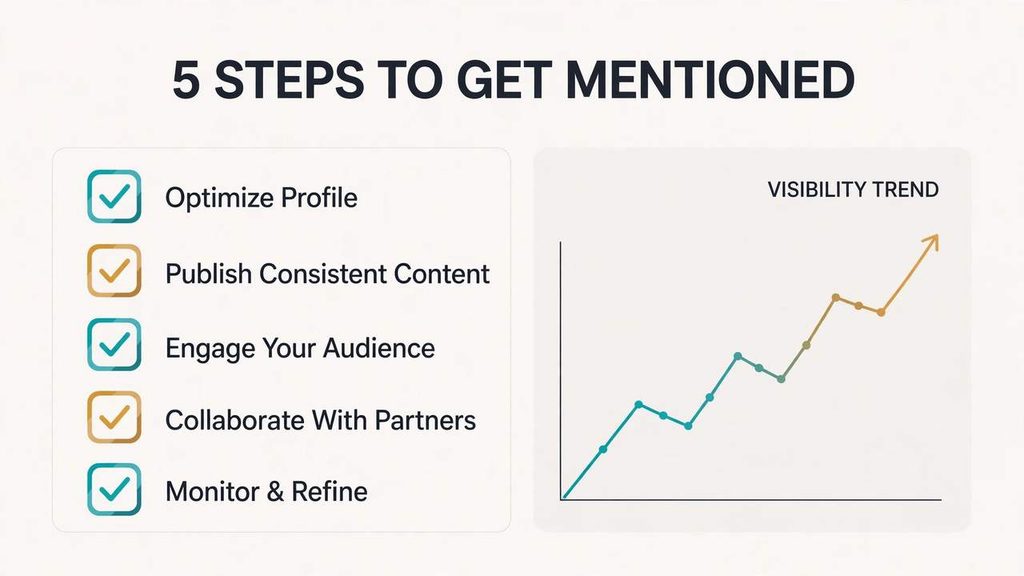
Step 1: One clear fact per page
Give each page one fact to own. A pricing page should state the price in plain words. A guide should answer one question in its first lines. When a page says everything, AI engines quote nothing. So cut each page to one clear point and say it early. If a draft sounds stiff, rewrite it in plain words. Our AI rewriter guide shows how to keep the meaning.
Step 2: Author and trust signals
Show who wrote the page and why they know the topic. Add a short author bio, a real company name, and a date. Then link to your sources. These signals help AI engines trust the page enough to cite it. In fact, trust is the quiet half of every AI mention. I never skip this step.
Step 3: Mentions beyond your own site
AI engines trust brands that other sites mention. Ask partners, customers, and local press to name your brand in their own words. A quote on a partner site counts more than ten mentions on your own blog. In addition, a listing in a trusted directory helps the engines place you. So build mentions the slow way: one real relationship at a time. This is the step most people skip.
Step 4: Fresh updates
AI answers favor fresh pages. Revisit your top ten pages each month and update the facts, dates, and examples. A page that still quotes last year prices looks stale to readers and engines. Meanwhile, a short update each month keeps the page in the running. So treat updates as part of the job. If it sounds stiff, soften it with our AI humanizer free guide.
Step 5: Measure monthly
Check your mentions once a month with the same ten questions. Then write the results in your sheet and compare them with last month. If a step works, do more of it. If nothing moves, change one thing at a time. Finally, share the trend with your team, so everyone sees what AI search thinks of your brand. I keep this review to thirty minutes.
FAQs
How to rank in AI Overviews?
Write a page that answers one question clearly, then earn trust with a real author and fresh facts. Google picks a small set of sources for each Overview, so a clear page with strong trust signals has the best chance. There is no trick that forces a citation. I wish there were.
How to track brand mentions in AI search?
Ask the same ten questions in ChatGPT, Gemini, and Perplexity each month, and write down when your brand appears. For a trend line, use an ai visibility tracker, which repeats the same prompts and charts the results. So that trend shows whether your ai searchability is rising or flat. Simple, and it works.
How to check keyword ranking in Google?
Use Search Console for free data on your own pages, or use a rank tracking tool for daily positions. Check the top ten results for your main keywords, then note which pages hold the top spots. Rankings still matter, but pair them with mention checks for the full picture. That pair is the whole point.
What is search optimization?
Search optimization means shaping your pages so search engines and AI engines can find, read, and quote them. It covers clear facts, fast pages, honest content, and links from trusted sites. In short, it is the work that makes your brand easy to find in any kind of search. Nothing fancy, just the basics done well.
How does SEO work?
SEO works by matching your pages to what people search for. Search engines read your content, weigh its trust and relevance, and rank it against rival pages. Today, AI engines do the same job, but they quote the best answers instead of listing links. So good SEO now serves both results and answers. That is the whole shift in one line.
Conclusion: start with one hour
It is not a mystery. Your ai searchability is the sum of clear facts, trust, and mentions beyond your site. Spend one hour this week: ask ten questions, note the gaps, fix one page. Then repeat it next month. Above all, small teams win this game by showing up every month, not by buying the biggest tool. One hour a month beats a tool you never open.
Finally, your monthly checklist: ten questions, one sheet, one fix per page, one update per month. Stick it on your wall.

