








Have you ever noticed Netflix somehow knows what you might enjoy next? Or how your phone can recognize your face even when the lighting is different? Maybe you have wondered how email apps decide which messages are spam and which ones are worth reading.
The answer behind many of these smart features is machine learning.
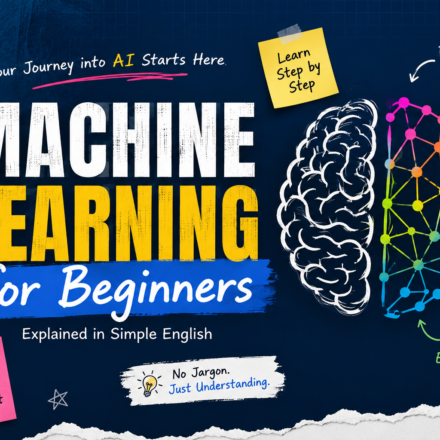
If you are searching for “what is machine learning for beginners,” the simple answer is this: machine learning is a way to teach computers to learn from examples instead of giving them every single rule by hand.
Think about how humans learn. A child does not understand what a dog is because someone writes a list of rules like “a dog has four legs, fur, and a tail.” The child learns because they see many dogs. After seeing enough examples, they start noticing patterns.
Machine learning works in a similar way.
A computer looks at information, finds patterns, and uses those patterns to make decisions or predictions. It does not think like a human, but it can become better at a task when it gets more useful examples.
What is machine learning for beginners?
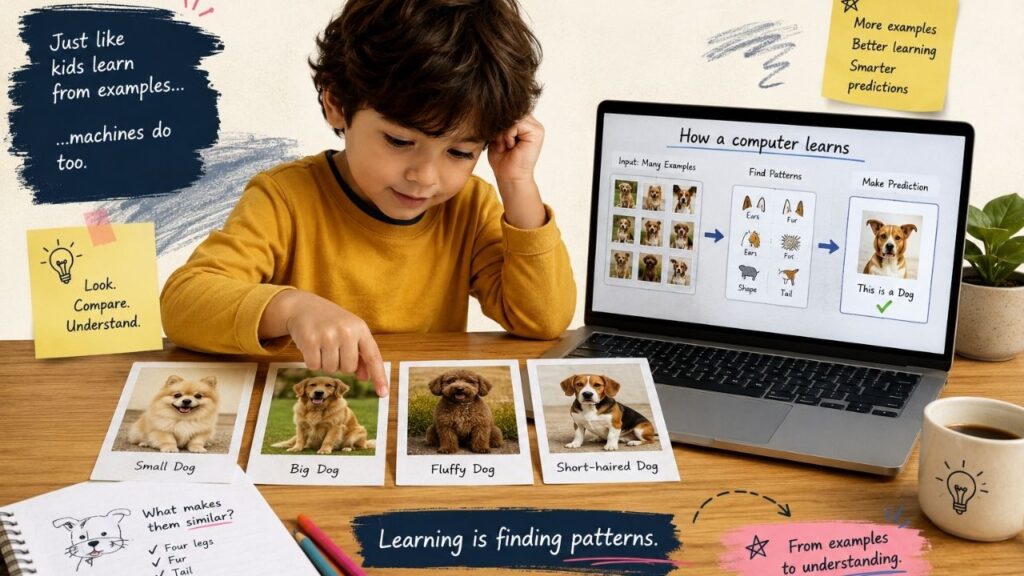
Imagine you are teaching a young child to recognize dogs.
At first, the child may see a picture of a dog and a picture of a cat and have no idea what makes them different. You show them more examples. Big dogs, small dogs, fluffy dogs, short haired dogs.
Slowly, the child begins to notice details.
- The shape of the face.
- The way the ears look.
- The body structure.
- The way dogs usually move.
Machine learning follows a similar idea. Instead of a child looking at pictures, a computer studies data.
Data is simply information. It can be pictures, words, numbers, sounds, or anything a computer can analyze.
For example, if you want a computer to identify dogs in photos, you give it thousands of pictures. Some pictures show dogs, and some do not. The machine studies these examples and learns the patterns that usually appear in dog images.
- After training, the system can look at a new photo and make a prediction.
- It might say, “This looks like a dog.”
- It is not guessing randomly. It is using patterns learned from previous examples.
- This is the basic idea behind machine learning.
The more useful examples a system receives, the better it can often become. But the quality of those examples matters. If you teach a system using poor information, it may learn the wrong patterns.
Read more: Types of Machine Learning: A Complete 2026 Guide
How machine learning learns from examples
Traditional computer programs usually work with clear instructions.
A programmer writes rules:
If this happens, do that.
Machine learning is different.
Instead of writing every rule, people give the computer data and a goal. The system tries to discover the rules by itself.
Think about teaching someone to recognize your favorite food.
You might show them pictures of pizza, burgers, rice dishes, and desserts. After enough examples, they begin to understand what makes each food different.
A machine learning model does something similar.
It looks for connections inside data. These connections help it make future decisions.
This process is used in many places:
Your phone predicting the next word you type.
Online stores suggesting products.
Maps estimating traffic.
Banks detecting unusual activity.
Streaming platforms recommending movies.
Machine learning is already around us. Many people use it every day without noticing.
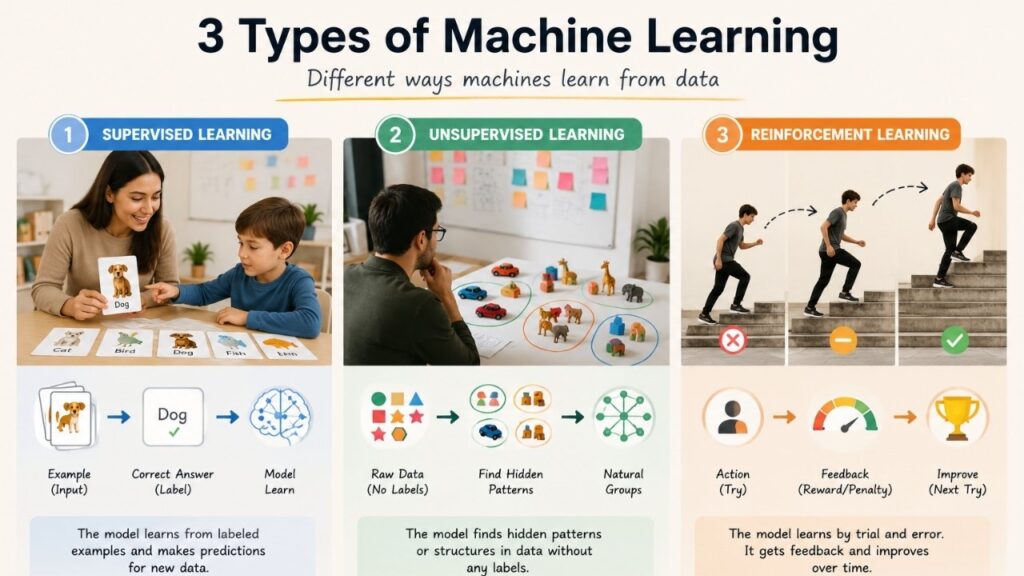
Three types of machine learning explained simply
Supervised learning
Supervised learning is like learning with a teacher.
Imagine a child learning animal names. You show a picture and say, “This is a dog.” Then you show another picture and say, “This is a cat.”
The child slowly connects the image with the correct name.
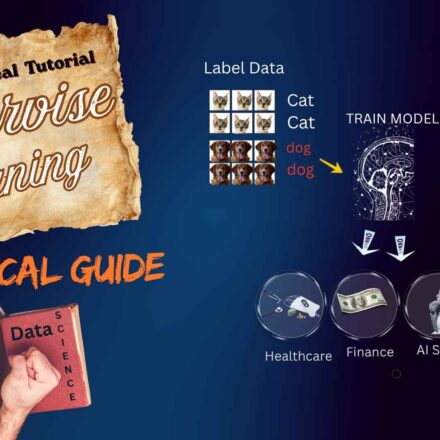
Supervised learning works the same way. The computer receives examples where the correct answer is already known.
For example:
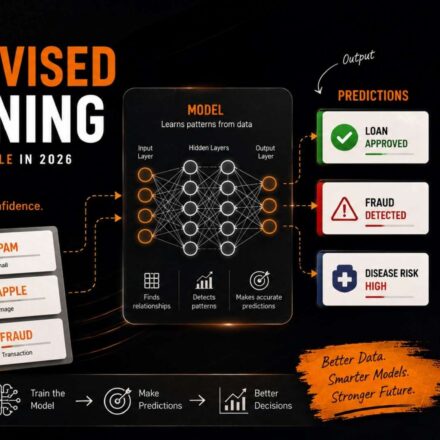
A company wants to detect spam emails. It gives a machine learning system thousands of emails marked as spam or not spam. The system studies the differences and learns how to classify new emails.
Supervised learning is commonly used for:
- Predicting prices.
- Recognizing images.
- Detecting spam.
- Understanding customer behavior.
If you want to learn more about this approach, the next step is exploring our guide on supervised learning.
Read more: Supervised Learning in 2026: Best Methods, Models, and Uses
Unsupervised learning
Unsupervised learning is like walking into a room full of objects and organizing them without someone telling you what each group means.
Imagine you have a box filled with different toys. Nobody tells you which toys belong together. You start noticing similarities.
- Cars go together.
- Dolls go together.
- Building blocks go together.
The same thing happens with unsupervised learning.
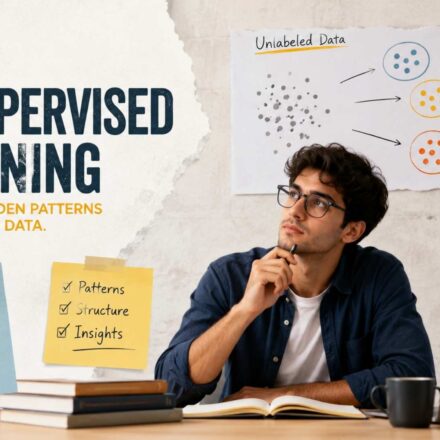
The computer receives data without labels and tries to discover hidden patterns.
For example, a business might use unsupervised learning to understand customers. The system may notice that some customers buy similar products or behave in similar ways.
The company can then create groups based on those patterns.
This type of learning helps find information that humans may not notice easily.
Reinforcement learning
Reinforcement learning is like learning through practice.
Imagine teaching a child how to ride a bicycle. They try, lose balance, adjust, and try again. When they do something correctly, they feel progress.
Reinforcement learning works with rewards and mistakes.
A system takes an action, receives feedback, and learns whether that action was helpful.
For example, a game playing system may try different moves. Good moves receive rewards. Bad moves receive negative feedback. Over time, it learns better strategies.
This type of machine learning is also used in robotics, automation, and decision making.
Common misunderstandings about machine learning
Many beginners have the wrong idea about machine learning. Let’s clear up a few things.
Machine learning is not just programming rules
A normal program follows instructions written by humans.
Machine learning finds patterns from examples.
A developer does not need to manually write every possible situation. Instead, they create a system that can learn from data.
Machine learning is not magic
Sometimes machine learning looks almost unbelievable.
A phone recognizing your face or a chatbot answering questions can feel like magic.
But behind it are mathematics, data, training, and computer systems working together.
The computer is not thinking like a person. It is finding patterns and making predictions.
Machine learning is not always correct
A machine learning system can make mistakes.
Why?
Because it learns from data. If the data is incomplete, outdated, or incorrect, the results may also be wrong.
For example, if a system only learns from certain types of images, it may struggle with images that look different.
Good machine learning requires good data, careful testing, and regular improvement.
Read more: Machine Learning vs AI: Which Is More Powerful?
Why is machine learning important?
Machine learning helps computers handle tasks that would be difficult to manage with simple instructions.
It can process huge amounts of information quickly and find patterns that humans may miss.
Businesses use it to understand customers.
Doctors use it to help analyze medical information.
Scientists use it to study complex problems.
Everyday apps use it to improve your experience.
The goal is not to replace human thinking. The goal is to help people solve problems faster and make better decisions.
How data affects machine learning
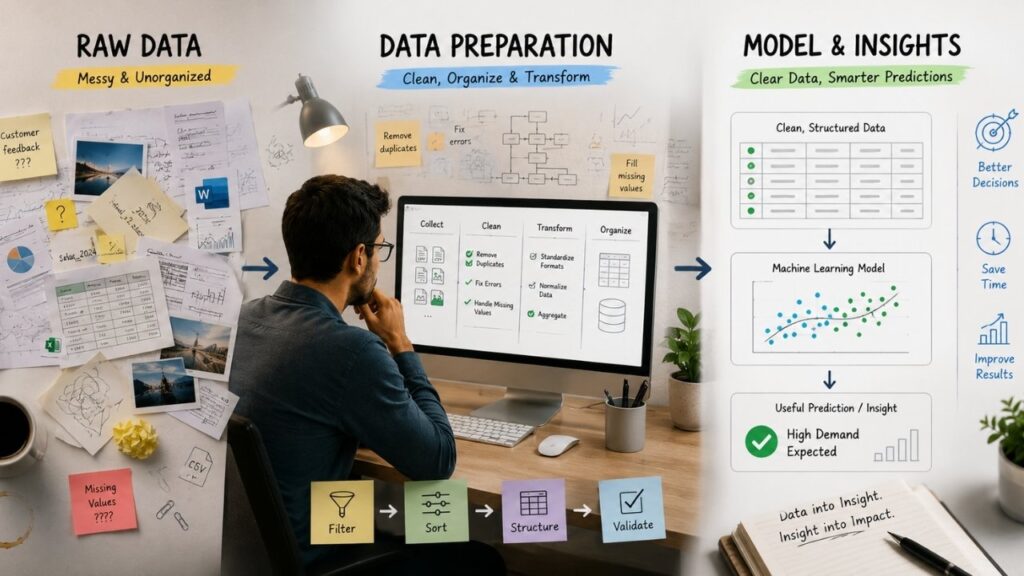
Behind every machine learning system is data.
Data is the fuel that helps the system learn.
But raw data is often messy. It may contain missing details, errors, or unnecessary information.
Before training a model, experts usually prepare and clean the data. This process is called data preprocessing.
Learning about data preprocessing helps you understand what happens before a machine learning model starts learning.
Read more: Machine Learning for Beginners: A Practical Guide (2026)
Beginner FAQ about machine learning
What is machine learning in simple words?
Machine learning is a method that allows computers to learn from examples and improve at tasks without being directly programmed with every rule.
Do I need to know coding to understand machine learning?
No. You can understand the basic ideas without coding. Learning programming helps later if you want to build machine learning systems.
Is machine learning the same as artificial intelligence?
Not exactly. Machine learning is one part of artificial intelligence. AI is a bigger field that includes systems designed to perform tasks that usually require human intelligence.
Can machine learning learn by itself?
Machine learning systems can improve from data, but humans still design them, choose the data, and guide the learning process.
Where do I see machine learning in real life?
You see it in recommendations, search engines, voice assistants, fraud detection, translation tools, and many apps you use every day.
Read more: AI and Random Forest: The Ultimate Beginner-to-Pro Guide (2026)
Final thoughts
Machine learning may sound complicated at first, but the basic idea is simple.
A computer studies examples, finds patterns, and uses those patterns to make predictions.
Just like a child learns to recognize dogs by seeing many examples, a machine learning system learns by studying data.
Once you understand this foundation, the next interesting step is learning how supervised learning works and why it powers so many real world applications.
Machine learning is not about creating a computer that thinks exactly like a human. It is about building tools that can learn from information and help people do more.
Ready to take your first step into machine learning?
Learning ML becomes easier when you understand the basics first. Continue your journey with our next guide on supervised learning and discover how machines learn from labeled examples.
Have questions or want to share your thoughts?
Reach out to our team:
writerzarirah@gmail.com