







Introduction
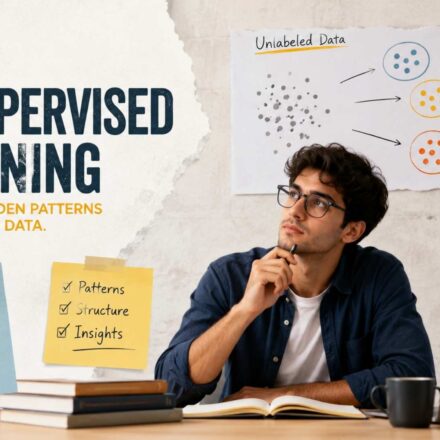
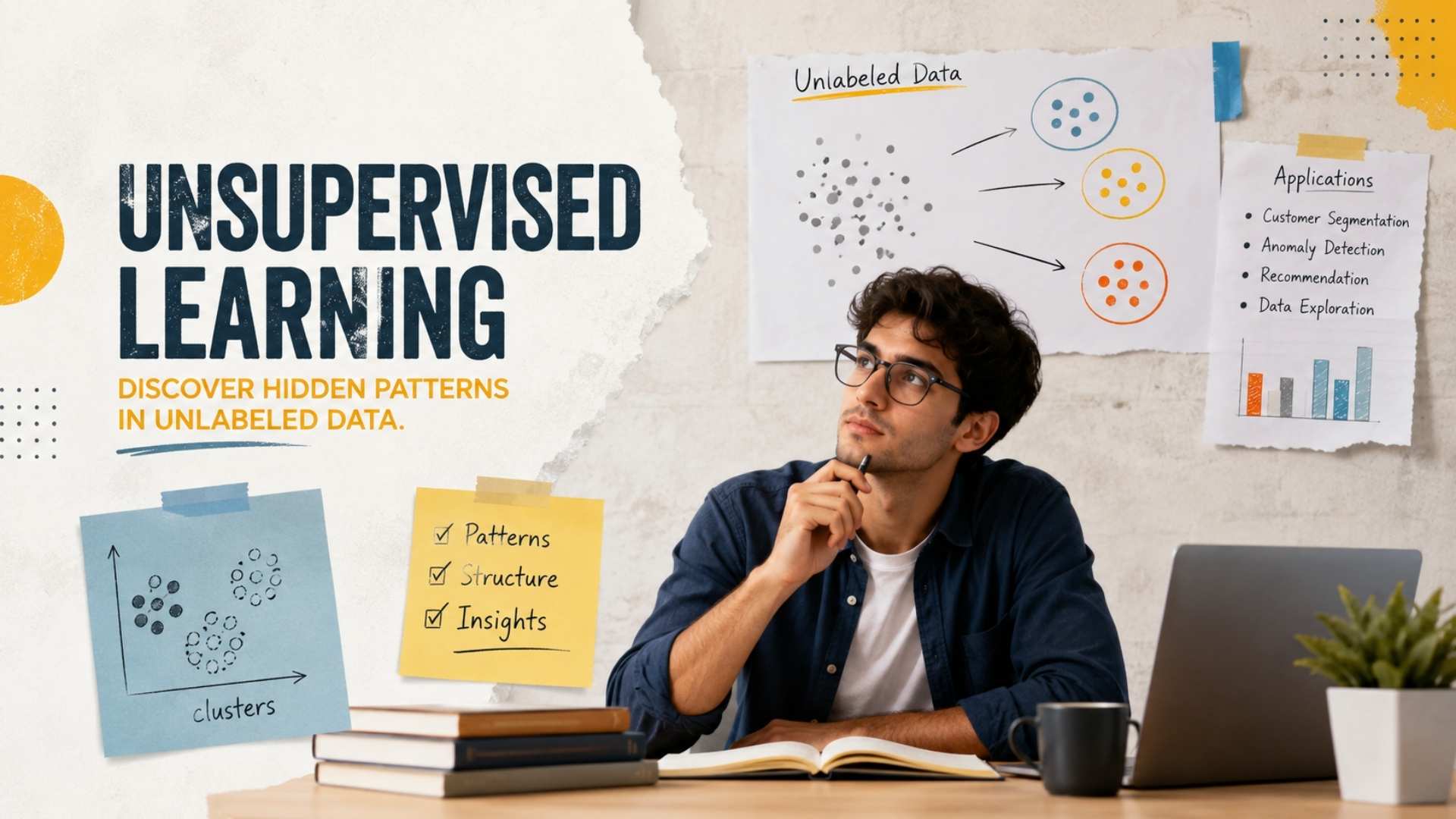
Every day, people generate massive amounts of data. This is where Unsupervised Learning becomes important. It works with unlabeled data. Instead of needing answers, it automatically finds patterns, relationships, and hidden structures.
Therefore, organizations can learn from data without heavy manual labeling. Social media posts, videos, emails, photos, online purchases, and sensor data all add up constantly.
In fact, billions of gigabytes are created daily. However, most of this data is not labeled or organized.
Labeling data takes time, money, and effort. Therefore, companies often store large amounts of raw data without structure. As a result, finding useful insights becomes difficult.
Today, Unsupervised Learning powers many real-world systems. For example, it helps Netflix recommend shows. Similarly, it helps online stores suggest products. Moreover, it is used in fraud detection, healthcare, customer segmentation, and business analysis.
One major strength of Unsupervised Learning is discovery. It can find insights humans may miss. As a result, businesses can uncover trends and opportunities they never noticed before.
In this guide, you will learn what it is, how it works, why it matters, and where it is used. In addition, you will explore its techniques, benefits, limitations, tools, and future trends.
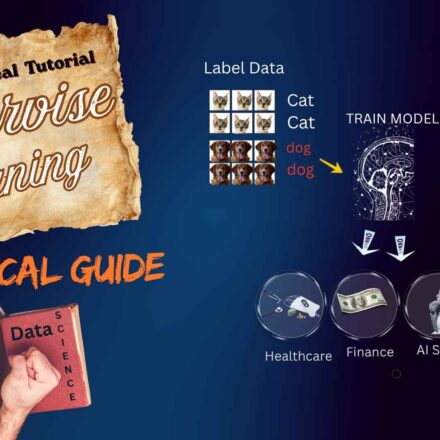
Read More: Supervised Learning: A Practical Tutorial
What Actually Unsupervised Learning Is?
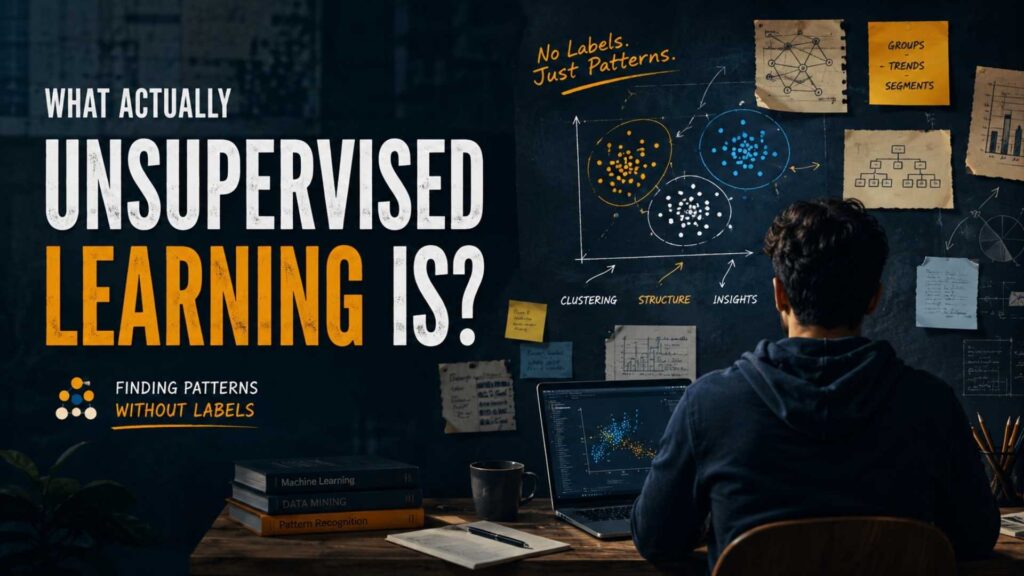
Unsupervised Learning is a machine learning method that works without labels.
Unlike supervised learning, it does not use correct answers. Instead, it learns directly from raw data. Therefore, it must find patterns on its own.
Think of it like sorting mixed objects without instructions. Naturally, you group similar items. Likewise, Unsupervised Learning groups similar data.
For example, it can analyze:
- Customer purchases
- Website activity
- Social media behavior
- Medical records
- Product preferences
As a result, it discovers hidden patterns in data.
Read More: Unsupervised Learning in AI: A Clear & Easy Guide
Why Unsupervised Learning Matters
Unsupervised Learning is powerful because it reveals hidden insights.
Traditional methods only look for known patterns. However, Unsupervised Learning finds unknown ones. Therefore, it is very useful for large datasets.
For example, a company may discover new customer groups. Similarly, a streaming platform may find unexpected viewing habits.
As a result, businesses make better decisions based on real behavior.
Key Reasons Why It Matters
1. Most Data Has No Labels
Most real-world data is unlabeled. Therefore, labeling everything is not practical. Unsupervised Learning solves this problem.
2. Hidden Insights Appear
It reveals patterns that are not visible at first. Consequently, businesses gain a deeper understanding.
3. Faster Decisions
It helps organizations find trends quickly. Therefore, they can respond faster to changes.
4. Better Personalization
It improves recommendations. For example, streaming and shopping platforms use it to personalize content.
How Unsupervised Learning Works
Unsupervised Learning finds structure in data without guidance. Instead of answers, it looks for similarities.
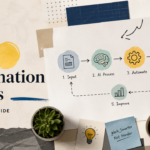
Step 1: Collect Data
First, raw data is collected. For example, transactions, images, or sensor readings. Importantly, no labels are needed.
Step 2: Find Similarities
Next, the system compares data points. Therefore, it finds what is similar and what is different.
Step 3: Group Data
Then, it forms groups or clusters. As a result, similar items are placed together.
Step 4: Generate Insights
Finally, patterns are analyzed. Therefore, useful insights are discovered from raw data.
Read More: How Unsupervised Learning Works with Examples
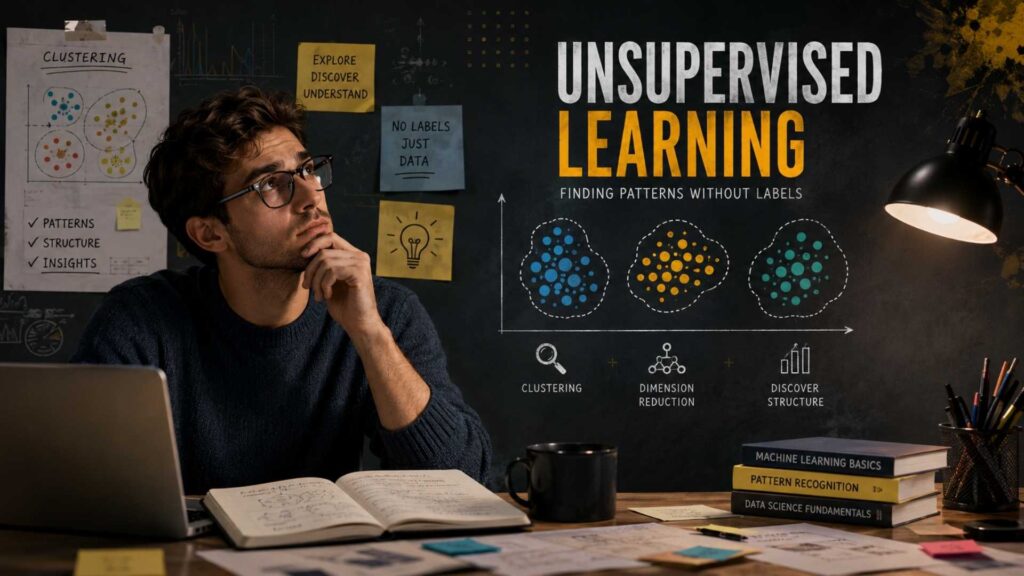
Key Concepts
Clustering
Clustering groups similar data. For example, customers with similar behavior are placed in one group. Consequently, businesses understand users better.
Association
Association finds relationships between items. For example, people who buy bread often buy butter too. Therefore, stores improve product placement and recommendations.
Dimensionality Reduction
This technique reduces complexity in data. Therefore, large datasets become easier to process and visualize.
Benefits include:
- Faster processing
- Easier visualization
- Better performance
Types of Algorithms in Unsupervised Learning
K-Means
K-Means is a simple clustering method. It divides data into groups. First, it picks random centers. Then, it assigns each point to the nearest center. After that, it updates the centers again and again.
Therefore, similar data stays in one group. It is widely used for customer segmentation. For example, businesses group customers by buying behavior. As a result, they can target each group better.
Hierarchical Clustering
Hierarchical Clustering builds a tree structure. It starts with one point per group. Then, it slowly merges similar groups step by step.
As a result, we can see data at different levels. Small groups form bigger groups. Therefore, it is useful for biology, documents, and customer grouping. Moreover, it helps show relationships clearly.
DBSCAN
DBSCAN is a density-based method. It groups points that are close together. It also finds points in low-density areas.
Therefore, it detects outliers easily. For example, it can find fraud or unusual activity. Moreover, it does not need the number of clusters first. Consequently, it works well with complex shapes.
PCA (Principal Component Analysis)
PCA reduces data size. It keeps only important information. First, it finds patterns. Then, it combines similar features.
Consequently, data becomes smaller and simpler. Therefore, analysis becomes faster. It is useful in images, large datasets, and visualization. Moreover, it improves model performance.
Read More: 24 Types of Unsupervised Learning Algorithms With Examples
Real-World Applications of Unsupervised Learning
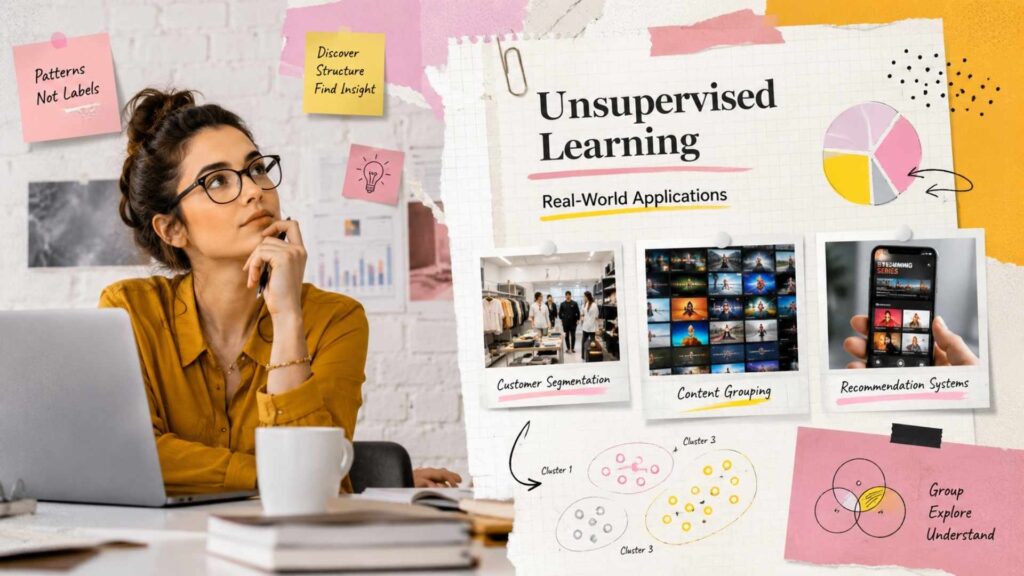
Unsupervised Learning is used in many real systems today. It helps companies understand user behavior. Therefore, they can improve services and user experience. Let’s look at some simple real-world examples.
Netflix
Netflix uses Unsupervised Learning to study user watch history. It checks what users watch, how long they watch, and what they skip.
Therefore, it groups similar users. As a result, people with similar tastes get similar recommendations.
Moreover, it suggests that you match your interests. This makes the viewing experience more personal and engaging.
Amazon
Amazon analyzes customer buying patterns. It looks at what people buy together and what they search for.
As a result, it connects related products automatically. Therefore, when you buy one item, you see useful suggestions.
For example, if you buy a phone, it may recommend a charger or cover. Consequently, shopping becomes easier and faster.
Tesla
Tesla collects large amounts of driving data from its cars. It studies speed, road conditions, and driver behavior.
Therefore, it improves navigation and safety systems. As a result, the car learns how to react better in different situations.
Moreover, it updates itself over time. Consequently, driving becomes smarter and safer with each update.
Read More: Tesla, Inc.
Meta
Meta analyzes how users interact on its platforms. It checks likes, shares, comments, and group activity.
Therefore, it groups users with similar interests. As a result, people see more relevant posts in their feed.
Moreover, it helps users discover new communities. Consequently, social media feels more engaging and personalized.
Google studies how people search and what results they click. It learns from billions of search patterns.
Therefore, it understands user intent better. As a result, search results become more accurate and useful.
Moreover, it detects trends early. Consequently, users get faster and more relevant answers.
Microsoft
Microsoft uses data from business tools and cloud systems. It analyzes how companies work and where they face problems.
Therefore, it finds hidden patterns in operations. As a result, businesses can improve performance and efficiency.
Moreover, it helps organizations make better decisions. Consequently, productivity increases across teams.
Apple
Apple analyzes how users interact with their devices. It studies app usage, settings, and behavior patterns.
Therefore, it personalizes the user experience. As a result, devices feel more natural and user-friendly.
Moreover, it improves suggestions like apps, music, and settings. Consequently, each device becomes smarter over time.
Benefits and Limitations
Benefits
- No labels needed
- Finds hidden patterns
- Works with large data
- Improves personalization
Limitations
- Hard to interpret results
- No clear accuracy measure
- Sensitive to noise
- Needs careful tuning
Common Mistakes in Unsupervised Learning
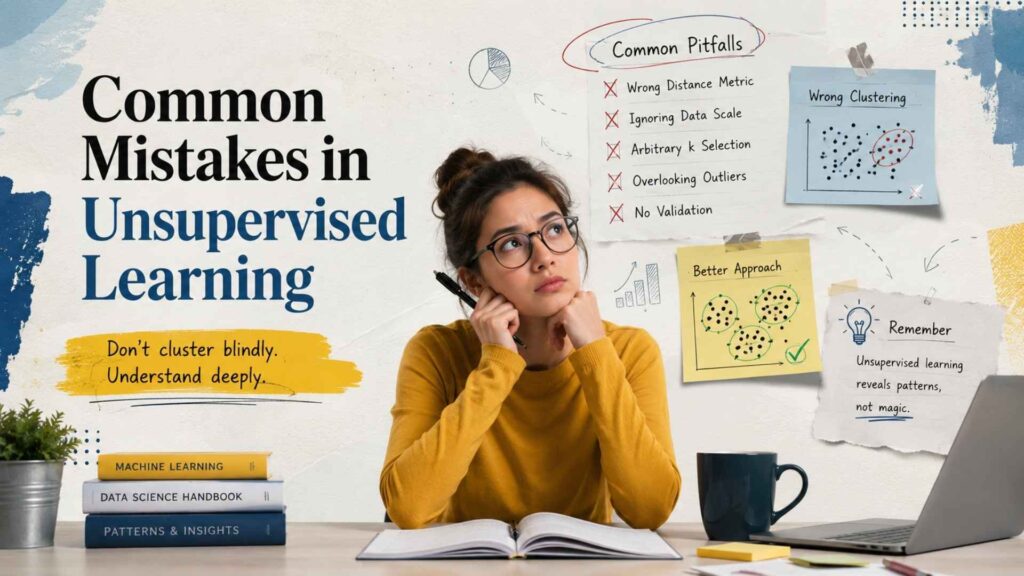
Over-Clustering
Over-clustering means making too many groups from the data. At first, it may look helpful. However, it often creates confusion.
For example, real data may only need 3 or 4 clusters. But forcing 10 or more makes the results messy. Therefore, patterns become hard to understand.
Moreover, too many clusters reduce clarity. So, decision-making also becomes difficult.
Therefore, always choose the right number of clusters. In addition, test different values to find meaningful groups.
Ignoring Noise
Ignoring noise is a big mistake. Noise means wrong, missing, or useless data.
At first, it may not seem important. However, it can change the results badly.
For example, duplicate or missing values can create false patterns. As a result, outputs become unreliable.
So, always clean your data first. Moreover, remove errors and fix missing values. Consequently, results become more accurate.
Read More: Common Mistakes in Unsupervised Learning
Expecting Perfect Results
Many people expect perfect results. However, this is not possible.
Unsupervised learning has no correct answers. Therefore, you cannot measure exact accuracy.
For example, two algorithms may give different clusters. But both can still be useful.
Moreover, real data is often complex. So, perfect results are unrealistic.
Therefore, focus on useful insights instead of perfection.
Wrong Algorithm Choice
Choosing the wrong algorithm is another common mistake. Every dataset is different.
For example, K-Means works well for simple groups. However, it fails with complex shapes.
On the other hand, DBSCAN works better with noisy data. But it needs careful tuning.
So, always understand your data first. In addition, try different algorithms. Consequently, you will get better results.
Best Practices
- Clean data first
- Visualize results
- Try multiple methods
- Use correct algorithms for each data type
Tools
Scikit-learn
Easy to use. Great for beginners.
PyTorch
Flexible and powerful. Used in research.
TensorFlow
Best for large-scale systems.
Future Trends in Unsupervised Learning
Self-Supervised Learning
Self-Supervised Learning is a strong new trend. Models learn from data without labels. Instead, they create their own learning signals.
Therefore, training becomes easier and faster. It also reduces human effort.
Moreover, it works well with large datasets. As a result, AI systems learn more quickly and more effectively.
Large Language Models
Large Language Models (LLMs) learn from huge amounts of text. Most of this text is unlabeled.
Therefore, they learn language patterns on their own.
As a result, they can write, answer questions, and understand text like humans. Moreover, they keep improving with more data.
In addition, they show the power of learning from raw data.
Read More: What are large language models (LLMs)?
Autonomous Systems
Autonomous systems include self-driving cars and robots. These systems collect real-time data.
They use this data to learn and improve. Therefore, they can make better decisions.
As a result, self-driving cars become safer. Moreover, robots become more useful in real tasks.
In addition, they keep learning from new situations. Therefore, they become smarter over time.
Healthcare
Healthcare uses Unsupervised Learning a lot. Hospitals have large amounts of patient data.
This method helps find hidden patterns in data. Therefore, it can detect diseases early.
As a result, doctors can treat patients faster. Moreover, it helps group similar patients.
In addition, it improves research and medical understanding. Therefore, patient care becomes better and more accurate.
Conclusion
Unsupervised Learning is a powerful AI method. It finds patterns without labels. Therefore, it is useful for large and complex data.
As data keeps growing, its importance will increase. Moreover, it helps businesses discover hidden insights.
Finally, the best way to learn is by practice. Start with real datasets. As a result, you will understand how raw data turns into meaningful insights.
Read More: Best laptop for Hacking, Exploring with AI, and powerful Recommendations
Call To Action
Need SEO content that ranks on Google and keeps readers engaged?
I create:
- SEO blog posts
- Keyword-focused articles
- Human-style content
- Easy-to-read blogs
- High-engagement website content
Let’s build content that performs.
📧 Email: craziya167@gmail.com
Author Bio
Digital Raziya is an SEO content writer specializing in AI, machine learning, and digital marketing.
She creates simple and clear content that is easy to read. In addition, she focuses on SEO-optimized articles that help websites grow. She is an expert in on-page SEO. Overall, her goal is to make complex topics easy for everyone.