

Muse Spark Open is Meta’s newest open-weight AI model, released on October 15, 2026, and it is already the most discussed AI launch of the month. With 816 billion total parameters, a one million token context window, and Muse Spark open weights you can download for free, it promises frontier level coding and agent work on hardware you can actually own. However, the benchmarks tell a more nuanced story, and the license has clauses every business should read before building on it.
I spent the last day comparing Meta’s model card, independent benchmark tables, and early cost analyses. Therefore, this guide gives you the practical picture: what Muse Spark does well, where it trails rivals like Kimi K3, what it really costs to run, and whether your team should self-host it or just call an API.
Why Muse Spark Open Matters Right Now
Something shifted this week in AI, and it did not happen in a giant data center. In fact, in about 48 hours, Meta, Black Forest Labs, and Mistral each released models designed to run on hardware you can own. For example, Meta’s Muse Spark can run on two high-end Mac Studios, while Black Forest Labs’ new image model runs on a single gaming GPU. As a result, small companies can now buy hardware once instead of renting cloud forever.
This matters for your budget because API bills compound. In contrast, a self-hosted model has a fixed upfront cost and near zero marginal cost per request. If you follow our Perplexity vs Claude comparison philosophy, you already know the rule: match the tool to the job, not the hype. The same applies here.
Muse Spark Open: 30 Second Overview

| What you care about | Muse Spark Open | Verdict |
|---|---|---|
| Release date | October 15, 2026 | Brand new, freshest open model |
| Size | 816B total, 42B active per token | Efficient MoE design |
| Context window | 1 million tokens | Excellent for agents |
| Overall intelligence | 39 on AA index | Behind Kimi K3 at 44 |
| Tool use | 89.2 on MCP-Atlas | Leads all open rivals |
| Coding | 76.4 on Terminal-Bench 2.1 | Trails Kimi K3 at 85.0 |
| Self-hosting | Two Mac Studios | Unique for this size |
What Is Muse Spark Open
Muse Spark Open is an open-weight mixture-of-experts model from Meta Superintelligence Labs. In particular, it has 816 billion total parameters, but only 42 billion activate per token across 256 experts. Because of this design, it delivers strong performance at a fraction of the compute a dense 816B model would need.
In addition, it reads text, images, video, and audio, and it writes text. In addition, it supports tool calling, structured output, and a one million token context window. Indeed, Meta calls it the most capable US open-weight model to date. However, that qualifier matters, since several Chinese open models still score higher overall.
The weights are free to download from Hugging Face under the Muse Model License. We covered Meta’s assistant strategy in our Muse AI breakdown, and Spark Open is the engine room behind that push: the model you can run yourself instead of renting.
Benchmarks: Where Muse Spark Open Leads and Trails
Every number below comes from Meta’s published comparison table, run at maximum reasoning effort. Therefore, treat them as vendor reported until independent testing lands.
| Benchmark | Muse Spark Open | Best rival cited | Result |
|---|---|---|---|
| MCP-Atlas (tool use) | 89.2 | 84.5 (Qwen3.8) | Leads |
| JobBench (agentic work) | 61.8 | 61.4 (GLM 5.3) | Narrow lead |
| ZeroBench with tools | 50.0 | 41.0 (Kimi K3) | Leads |
| HLE-Diamond, no tools | 26.1 | 22.2 (Kimi K3) | Leads |
| Terminal-Bench 2.1 | 76.4 | 85.0 (Kimi K3) | Trails |
| DeepSWE 1.1 | 60 | 68 (Kimi K3) | Trails |
| AA Intelligence Index | 39 | 45 (GLM 5.3) | Trails |
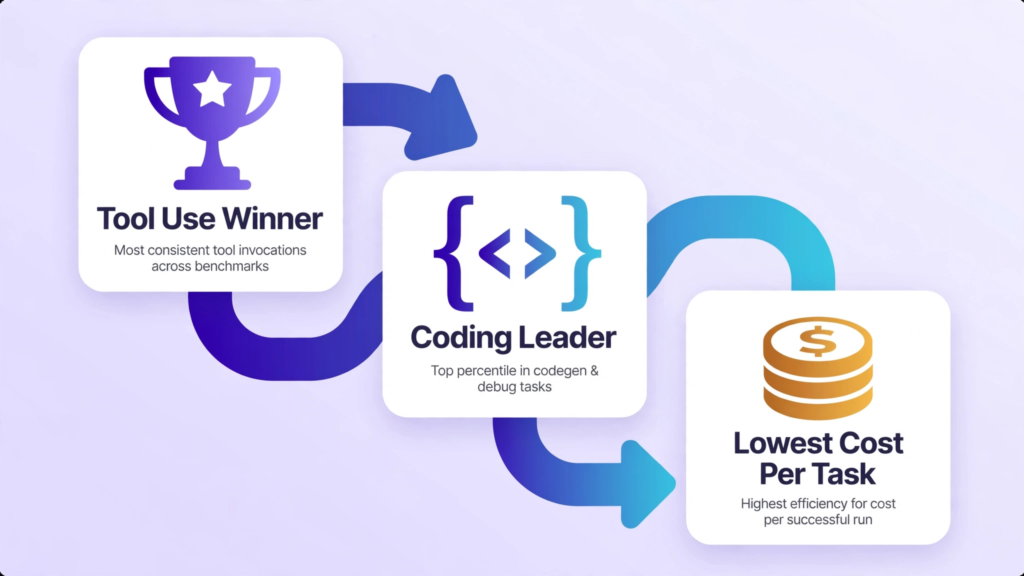
Ultimately, the pattern is clear. Muse Spark wins the tests that look like tool work: picking the right tools, ordering API calls, and handling multimodal inputs. On the other hand, it trails on classic coding benchmarks, which is awkward because Meta pitches it as a coding model. For example, Kimi K3 scores 85.0 on Terminal-Bench 2.1 against 76.4 for Spark Open.
A detailed three-way comparison with pricing appears in this Muse Spark Open vs Kimi K3 cost and benchmark analysis, which is worth reading alongside this guide.

The Mac Studio Story: AI on Your Own Hardware
Above all, the headline that made Muse Spark Open go viral is not a benchmark. It is the demo of the full 816B model running on two Apple Mac Studios with M5 Ultra chips. Each machine offers up to 512GB of unified memory, so the pair holds every parameter in memory with room to spare. Meanwhile, Apple’s MLX framework pulls the weights straight from Hugging Face.
Meta even showed agent workflows running entirely on the Macs. In one test, the model shipped real iOS changes to an open source app, including bug fixes and new features. In another test, it drove video editing software from start to finish. Consequently, a small team can now run frontier class agents without sending code or data to any cloud. The full story is covered in this report on Meta and Apple running Muse Spark Open on Mac Studio.
This is part of a wider trend. For instance, this week’s open releases all target owned hardware, as summarized in this roundup of this week’s self-hostable AI releases. As a result, 2026 may be remembered as the year AI moved back onto local machines.
What Does Muse Spark Open Really Cost
Generally speaking, there are two ways to pay: inference APIs or your own hardware. Because Meta runs no first-party API, pricing comes from third-party providers and will shift as competition grows.
On APIs, early data shows Muse Spark Open is the cheaper model at every tier. For example, its blended price per million tokens is about $0.78 against $2.31 for Kimi K3, and cost per benchmark task is roughly $0.84 against $2.00. In addition, it uses fewer reasoning tokens per task, so the gap widens on real workloads.
On your own hardware, the math is different. Two Mac Studios are a large one-time purchase. Nevertheless, the marginal cost per request is near zero. Therefore, high volume teams can break even surprisingly fast. On the other hand, low volume users should stick with pay-per-token APIs.
The License: Read Before You Build
Muse Spark Open is open-weight, not open source in the traditional sense. It ships under the Muse Model License, which allows use, modification, fine-tuning, and distribution. However, there are two clauses to note.
Firstly, products built on it must display “Built with Muse Spark”. Secondly, Model-as-a-Service providers with over $20 million in gross revenue over any consecutive 12 months must sign a separate agreement with Meta. Internal use and research are excluded from that condition. Consequently, most small businesses can use it freely, but SaaS companies approaching that revenue line should get legal review.
Muse Spark Open vs Kimi K3: Which Should You Pick
For most business teams, the choice comes down to three factors.
- Pick Muse Spark when you need the best tool-use agent, the lowest per-task cost, multimodal input, or self-hosting on your own hardware.
- Pick Kimi K3 when raw coding ability matters most, since it leads Terminal-Bench 2.1 by a wide margin.
- Watch GLM 5.3 as the balanced third option, leading the overall intelligence index at 45 among the three.
In short, Spark Open is the efficient agent specialist, while Kimi K3 remains the stronger coder. Because your workload likely mixes both, many teams will route coding tasks to Kimi K3 and agent tool-use tasks to Spark Open.
Frequently Asked Questions About Muse Spark Open
When was Muse Spark Open released?
Muse Spark Open was released on October 15, 2026, with weights available on Hugging Face under the Muse Model License.
How big is Muse Spark Open?
It has 816 billion total parameters with 42 billion active per token, using a mixture-of-experts design with 256 experts per layer.
Can Muse Spark really run on Mac Studios?
Yes. Meta demonstrated the full model running on two Mac Studios with M5 Ultra chips and 512GB unified memory each, using Apple’s MLX framework.
Is Muse Spark better than Kimi K3?
It depends on the task. Muse Spark Open leads on tool use and costs less than half per task. However, Kimi K3 leads on coding benchmarks and overall intelligence scores.
How much does Muse Spark cost to use?
Weights are free to download. API pricing comes from third-party providers at roughly $0.78 blended per million tokens, while self-hosting costs hardware upfront with near zero marginal cost.
What is the Muse Model License?
It permits use, modification, and distribution, requires a “Built with Muse Spark Open” notice, and requires a separate Meta agreement for hosted services over $20M annual revenue.
Does Muse Spark Open handle images and video?
Yes. It accepts text, image, video, and audio input, and it leads rivals on multimodal tests like ZeroBench with tools.
What is the context window?
Muse Spark Open supports a one million token context window, which suits long agent workflows and large codebases.
Should a small business self-host Muse Spark Open?
Only at high volume. Because hardware is a large fixed cost, low volume teams should use pay-per-token APIs instead. As a result, most small businesses should start with APIs and consider self-hosting later.
Where does it fit with Meta’s other models?
Muse Spark Open is the open-weight sibling of the closed Muse Wonder family. In contrast to Wonder, which is API and subscription only, Spark Open’s weights are downloadable.
Conclusion
Muse Spark Open is the most interesting open model release of 2026 so far, not because it tops every chart, but because it changes the economics. It wins tool-use benchmarks, costs less than half per task compared with Kimi K3, and runs on hardware a small company can buy. On the other hand, it trails on coding, so it is not a universal replacement.
My recommendation is practical. If you run agents that call tools, pilot Muse Spark Open this month through a cheap API provider and measure cost per finished task. If you mainly need raw coding power, Kimi K3 remains the stronger pick. In either case, the era of renting every AI call is ending, and owning your inference is now a real option.


[…] Elorian is a Palo Alto startup founded by Dai, a former Google Brain and DeepMind researcher, which raised a $55 million seed at a $300 million valuation (Striker, Menlo, Altimeter; Nvidia and Jeff Dean participating) six months before launch. Serious backers — and still a first product. For the broader open-weights pricing shakeup, see our Muse Spark Open business guide. […]
[…] US readers: the same playbook now runs on both sides of the Atlantic. If you follow every major model launch, this is the services layer those launches […]
[…] wants employment risk assessments attached to major AI projects. As we track in our coverage of the latest AI model launches, the automation frontier keeps […]
[…] more on competing models in this space, see our Muse Spark Open overview and DeepSeek V4.1 Flash […]