


Quick Answer: AI and business work best when one tool does one clear job, for example drafting emails, summarizing meetings, or answering common customer questions. Therefore, start free, pick one workflow, and name one owner. As a result, AI and business spending stays small until a use proves it saves real time each week.
AI and business is a practical category of software that helps a small firm finish everyday work faster and with fewer errors. In addition, AI and business tools now sit inside email, documents, and chat products teams already use, so starting does not need a technical project.
However, choice creates confusion, because every vendor promises broad results. For example, one assistant can draft a proposal and summarize a call, yet it saves time only when the task is clear. Therefore, this guide covers specific jobs, real prices, and checks for AI and business decisions.
In addition, adoption is already mainstream, because the Bluevine 2026 Small Business AI Trends Report found 74% of owners already use or test AI tools. As a result, the question is which job comes first.
What is artificial intelligence with examples?
Artificial intelligence is software that predicts text, images, or decisions from patterns in data, so it can draft, classify, summarize, and recommend. For example, AI and business software can turn a meeting recording into action points. In addition, it can sort customer messages by urgency, so staff handle hard cases first.
However, AI and business tools do not know your firm the way an owner does. Because output depends on the prompt and source material, a vague request gives a vague answer. Therefore, pair each tool with a clear input, a clear output, and a human check before use.
AI and Business in Practice
In practice, AI and business means one assistant inside a daily workflow, for example email, documents, support, or accounting. Therefore, value comes from the workflow, not the model name. In addition, the best first workflow is frequent, repetitive, and easy to check.
According to Bluevine, top uses are data analysis and business insights at 39%, marketing and sales at 37%, automating operations at 29%, customer service at 27%, and financial management at 23%. However, owners simply start where work piles up. As a result, reporting, content, and admin show value first.
What can I do with AI?
You can draft, summarize, search, sort, and reply, so match each use to one job in your week. For example, AI and business tools can cut a long report into a one page summary with risks highlighted. In addition, teams can build approved replies, so answers stay consistent.
Writing and admin with business AI
Business AI is strongest for first drafts and summaries, because the source material is already in front of you. For example, it can shorten a supplier email or turn notes into a proposal outline. However, check names and figures before sending, as our guides to how to humanize AI text and the AI rewriter explain.
Marketing and sales
For marketing, AI can draft product descriptions, social posts, and follow up messages, so a small team publishes consistently. For example, Bluevine found marketing and sales is a top use at 37%. However, visibility also depends on how assistants present your firm, so read our explainer on businesses in ChatGPT.
Customer service
For customer service, AI and business tools can suggest replies, summarize threads, and answer common questions from approved help content. As a result, agents spend less time searching for policy wording. However, customers should always reach a person easily, because trust drops when a bot blocks an urgent problem. Therefore, start with internal reply suggestions, then review failures weekly.
Finance and reporting
For finance, AI can explain a variance, summarize a monthly report, and draft a payment reminder. Because Bluevine reports financial management as a use for 23% of owners, this is a common start. However, never let a tool approve payments alone, because finance errors carry direct cost. For example, ask it to list questions for your bookkeeper.
Operations
For operations, AI can summarize handovers, build checklists, and turn voice notes into tasks. As a result, teams lose less information between shifts. For example, a manager can record a walkthrough, then add due dates by hand. However, keep human approval for shipping and refunds, because a missed step can affect an order.

AI Business Solutions: How to Choose One
AI business solutions are packaged tools for a defined job, such as support chat, document drafting, meeting notes, or sales outreach. Therefore, choose by the job, the data it touches, and where your team already works. In addition, AI and business purchases work better as short trials on real work than as long feature comparisons.
First, write the job in one sentence, for example, summarize sales calls and create follow up tasks. Because that sentence names input and output, weak tools become easy to reject. However, many buyers pay for broad platforms and unused seats.
Next, check data terms, admin controls, and export options before price. For example, our comparison of Perplexity vs Claude shows why workflow fit matters more than headline features. In addition, our guide to AI search engine optimization explains why accurate product pages help customers find you.
How do you use AI and business tools?
You use AI by giving it a clear task, the source material, and a format for the answer, then checking the result. For example, a strong prompt names the audience, the length, and the facts it must not change. Therefore, AI and business results improve when staff share proven prompts instead of improvising each time.
However, a prompt alone is not a process. Because the same request can produce different drafts, customer facing work needs an approval step. For example, one person drafts and another checks figures. In addition, save good outputs with their prompts, so new staff can copy proven patterns.
AI for Manufacturing: Where Small Firms Benefit
AI for manufacturing fits small firms best in quality checks, maintenance notes, and inventory planning, because those jobs produce clear records to review. For example, a workshop can summarize machine logs and flag repeated faults for an engineer. However, AI and business tools should not control machinery or pass final quality decisions without human review.
In addition, office uses often pay back sooner. For example, a manufacturer can summarize supplier quotes and turn delivery notes into a stock checklist. Therefore, start with documents and planning, so the team learns the checks before operational use expands.
AI and business products and prices compared
The main AI products for small teams are ChatGPT Business, Claude Team, Gemini inside Google Workspace, and Microsoft 365 Copilot Business. Therefore, compare them by where your work already lives, because switching email and documents costs more than a small price gap. In addition, AI and business budgets stay predictable when you count seats carefully.
Prices checked in November 2026, re-check before you subscribe, because offers change. For example, Anthropic’s official pricing page, checked on 18 Nov 2026, lists Claude Pro at $17 per month with annual billing, or $20 monthly. However, OpenAI’s pricing page lists its plans without dollar figures in text form, so confirm totals at checkout.
| Tool | Best for | Price | Free option | Watch out for |
|---|---|---|---|---|
| ChatGPT Business | Drafting, analysis, shared team work | $20 per user per month billed annually, or $25 monthly, 2 seat minimum | Free plan | Confirm total at checkout |
| Claude Team | Long documents and careful writing | $20 per seat per month billed annually, or $25 monthly, 2 to 150 seats | Free plan | Overbuying seats |
| Gemini in Google Workspace Business Standard | Teams using Gmail and Docs | $14 per user per month on annual billing, including Gemini | Consumer access | Check the Google Workspace pricing page |
| Microsoft 365 Copilot Business | Teams using Outlook, Word, and Teams | $18 per user per month billed yearly, first year offer through 31 Dec 2026, $21 regular price | Trial options vary | Offer end date |
As a result, a solo owner can start at $0 on free tiers. For example, November 2026 price guides suggest about $50 per month for a solo setup, and roughly $130 to $160 for a team of four. Therefore, AI and business spending should follow a proven workflow, not a hoped for team size.
How do I use AI and business tools? A first-week plan
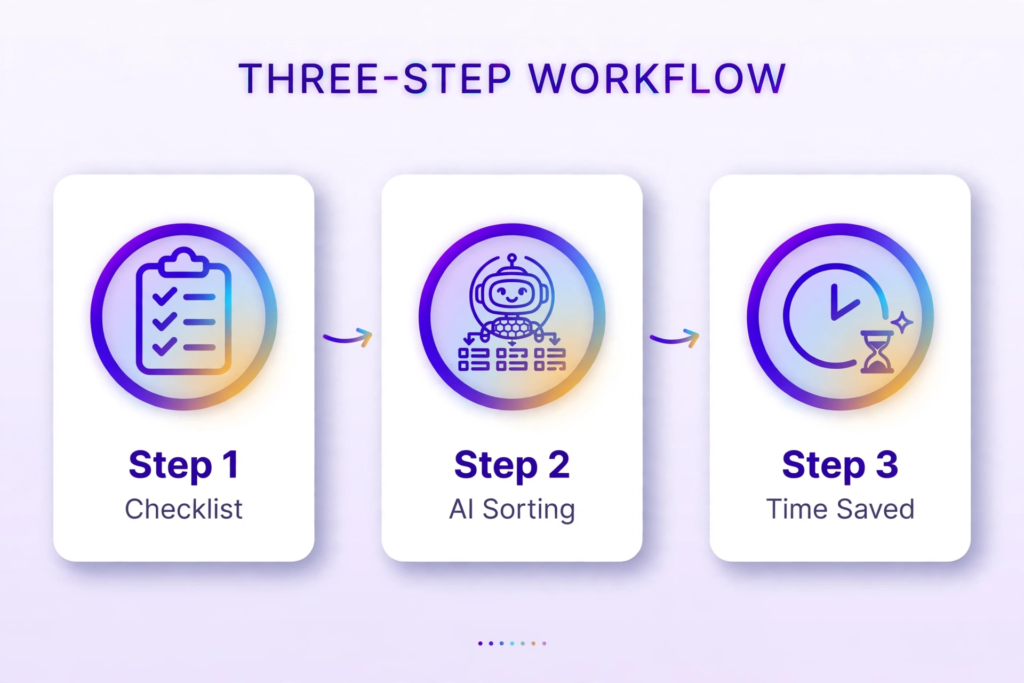
You start by picking one repeated job, testing it for five days, and keeping it only if it saves time without adding errors. Therefore, AI and business adoption works best as a small trial with an end date. In addition, one owner should run the trial.
- Day 1, pick one job. For example, choose meeting summaries, because they are frequent and easy to check. Therefore, note the time cost first.
- Day 2, prepare safe inputs. However, remove customer personal data first, so the trial uses low risk material. In addition, save two good examples.
- Day 3, test real work. For example, run five tasks and score accuracy and editing time. As a result, you see whether the tool helps.
- Day 4, add a check. Because errors hide in confident wording, assign one person to verify figures and dates.
- Day 5, decide. For example, keep, adjust, or drop the workflow based on time saved. In addition, save the final prompt.
Real-World Application and Pitfalls
In real use, AI and business value shows up as hours returned to owners and staff. According to Bluevine’s 2026 report, a survey of 942 US small business owners fielded 7 to 9 Apr 2026, 52% of AI users report a return on investment, and 48% save at least 4 hours per week. In addition, 33% use AI regularly across multiple areas.
However, common mistakes are predictable. For example, pasting customer data into a free plan creates privacy risk, because free terms may offer weaker controls. Therefore, set a data rule on day one. In addition, trusting unchecked output fails often, because a polished draft can contain a false price.
Bluevine found barriers include data security concerns at 33% and distrusting AI accuracy at 31%, so skepticism is reasonable. As a result, AI and business workflows need a named owner. However, buying five tools at once wastes money, because nobody reviews errors across five systems. Therefore, review one workflow monthly.
How We Tested
We checked official pricing pages on 18 Nov 2026 and compared the four main business plans on price, data terms, and where work already lives. In addition, we used Bluevine’s April 2026 survey for adoption numbers, because it reports sample size and field dates. However, no tool was tested with live customer data, so AI and business claims here do not cover private records.
Frequently Asked Questions
How many people use AI?
Among US small business owners, Bluevine found 74% are already using or actively testing AI tools, and 33% use them regularly across multiple areas. Therefore, adoption is broad, although depth varies. For example, some firms use one assistant for writing, while others use tools across marketing and finance.
Is AI safe for customer data?
AI and business plans are safer for customer data than free accounts, because paid plans usually add admin controls and clearer data terms. Therefore, keep personal data and payment details out of prompts unless your policy allows them. In addition, train every user on that rule.
AI and business results come from one clear job, one checked workflow, and one owner who reviews output. Therefore, start free, prove the time saving, and then pay for the plan that fits your tools. As a result, AI and business spending stays useful and controlled, while your team keeps charge of quality and customer trust.



[…] Business integrated with Ramp on 28 October, so employees can expense rides without manual uploads. Our guide to AI and business shows how small teams pick one tool for one clear […]