

Quick answer: Most beginners waste money on AI tools for SEO because they buy a tool before defining their goal and publish AI output nobody checks. A free start (Google Search Console, a free Ahrefs account, and ChatGPT or Claude) covers most beginners, and a paid plan around $140 a month only pays off once you have ten or more pages worth improving.
If you are searching for AI tools for SEO, you already know manual keyword research and site audits take too many hours. What you do not know is which tools are worth paying for first, and where AI output needs a human check before it goes live.
By the end of this article, you will know the seven mistakes that waste money and hurt search visibility, how to match search intent and budget to the right tool, how to run keyword research with real data, and an eight-step workflow that grows organic traffic without publishing anything unchecked.
The Best AI Tools for SEO at a Glance
- Semrush: all-in-one research, competitor analysis, and site audits
- Ahrefs: keyword data and backlink analysis
- Surfer SEO or Clear scope: content optimization and scoring
- ChatGPT or Claude: drafting, outlines, and keyword clustering
- Google Search Console: free, real performance data from Google
What AI Tools for SEO Actually Do
AI tools for SEO use natural language processing (NLP) and large language models to read text, spot patterns, and predict what a page needs to rank. Some tools analyze data. Others write.
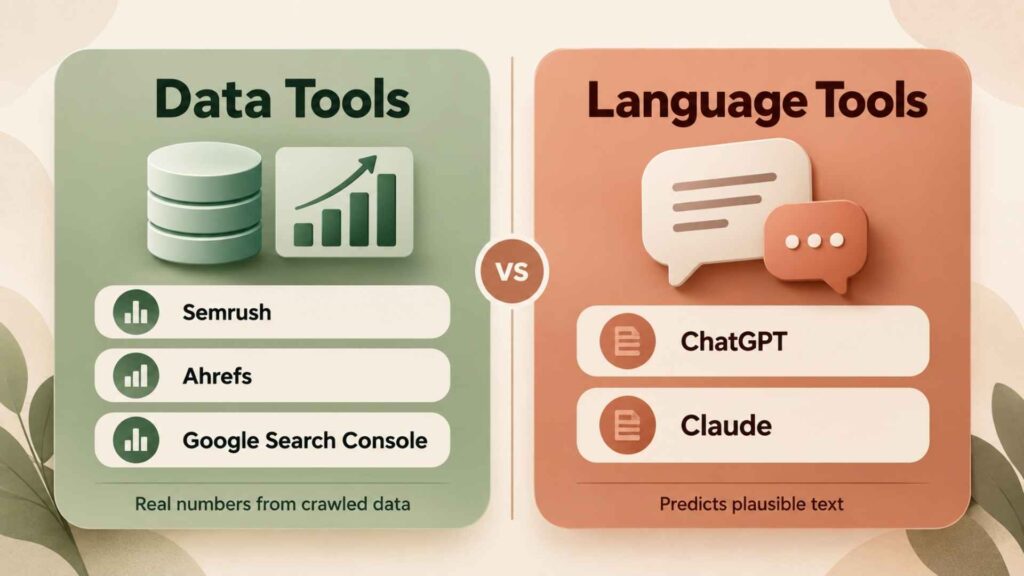
An analysis tool such as Semrush or Ahrefs pulls numbers from its own crawled index and keyword database. A language tool such as ChatGPT or Claude generates text from patterns. Both can now search the web, but neither holds reliable keyword volume or difficulty data on its own, so treat their numbers as leads to check.
Most beginner mistakes come from mixing the two up.
Mistake 1: Buying a Tool Before Defining Your Search Intent
Beginners often start with the tool and work backward. They sign up, run a scan, and then wonder what to do with 400 “issues.”
Start with the goal. Are you trying to find topics, fix a slow site, or improve a post that already ranks? Each goal needs a different tool, and matching search intent is the core of content planning.
The fix: write one sentence before you shop. “I need to find low-competition keywords for a new blog” points you to AI tools for keyword research. “My traffic dropped after an update” points you to a site audit tool.
| Your goal | Tool type | Examples |
|---|---|---|
| Find topics and keywords | AI tools for keyword research | Semrush, Ahrefs |
| Improve an existing page | Content optimization and AI tools for on-page SEO | Surfer SEO, Clearscope, Frase |
| Fix site problems | Site audit | Semrush, Google Search Console |
| Draft or outline content | AI writing | ChatGPT, Claude |
Mistake 2: Publishing AI-Generated Content Without Human Oversight
This is the most expensive mistake. Raw AI-generated content tends to sound accurate, read generically, and look identical to what a hundred other sites published that week.
Google’s guidance on AI-generated content on Google Search Central focuses on helpful content that shows E-E-A-T (experience, expertise, authoritativeness, trust), not on how a page was produced. Danny Sullivan, Google’s Search Liaison, and John Mueller, Google’s Search Advocate, have both made this point publicly. Google’s spam policies do target scaled content abuse, which means mass-producing pages mainly to manipulate rankings.
So does Google penalize AI content? Not for using AI. It can for publishing thin, unhelpful pages at scale.
The fix: add human oversight at three points.
- Add your own experience, screenshots, or data.
- Run fact-checking on every claim, number, and tool feature.
- Rewrite anything that sounds like a brochure.
AI SEO content writing tools work best as a first-draft engine, not a publisher.
Mistake 3: Trusting Content Scores Like They Are Rankings
Surfer SEO, Clear scope, MarketMuse, and Frase all give you a content score. A green 90 feels like a win.
It isn’t a ranking. A content score measures how closely your page matches the terms used by pages that already rank. It says nothing about whether your page is better, newer, or more trustworthy. Chasing a perfect score often produces stuffed, awkward writing, and a page that scores 72 and answers the question clearly can beat a page that scores 95 and wanders.
The fix: treat the score as a checklist for missing topics. Use AI tools for SEO content optimization and other AI tools for SEO optimization to find gaps in semantic SEO, such as related terms and entities you forgot. This is entity optimization: naming the people, tools, and concepts a reader expects to see. Then write for the reader.
For on-page SEO, a good tool should also suggest internal linking and meta descriptions. Read every suggestion before you accept it.
| Tool | Best fit |
|---|---|
| Surfer SEO | Bloggers and small teams improving existing pages |
| Clearscope | Larger content teams that want simple, clean scoring |
| MarketMuse | Topic planning and topical authority at scale |
| Frase | Budget-friendly briefs and optimization |
Mistake 4: Taking AI Keyword Numbers at Face Value
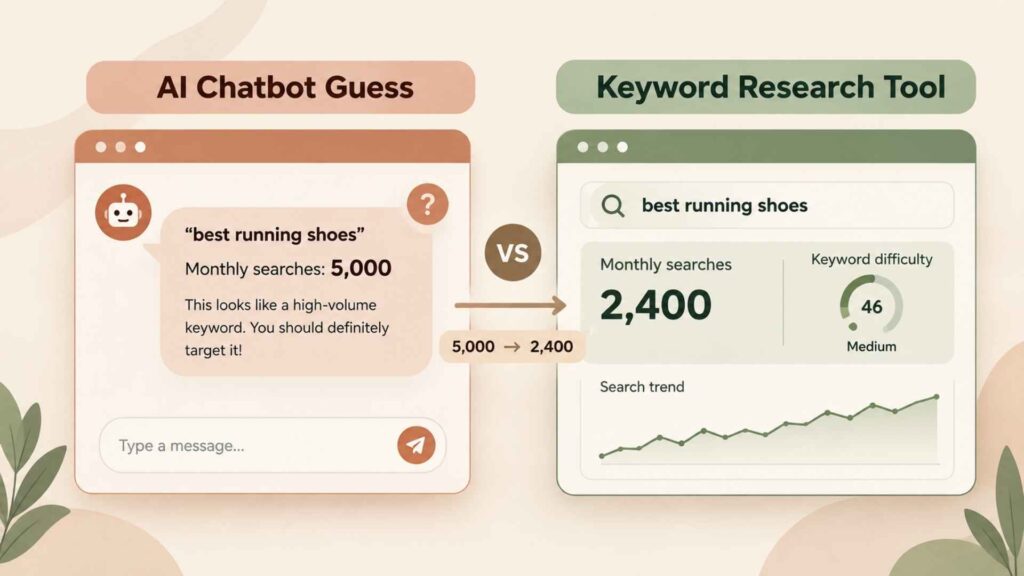
Ask a general chatbot for “keywords with 5,000 monthly searches and low difficulty” and it will give you a confident list. Many of those numbers will be estimates or inventions, and beginners then build a whole content calendar on them.
The fix: use a data-backed tool for keyword analysis and use the chatbot for ideas only. Which AI tool is best for keyword research? For accuracy, Semrush and Ahrefs lead because they draw on large keyword databases. The Semrush SEO Toolkit covers keyword research, competitor analysis, and site audits in one place. Use AI tools for keyword analysis to speed up sorting, never to supply the data itself.
Then use AI for what it does well: keyword clustering. Paste 200 validated keywords into ChatGPT or Claude and ask it to group them by search intent. You get a topic map in minutes that would take hours by hand.
Clustering also builds topical authority. Covering a subject in connected pages signals depth, and one lonely post rarely does.
Mistake 5: Skipping Technical SEO Because the Tool Writes Nicely
Content tools feel productive. Technical work feels boring. So beginners polish articles on a site that Google can’t crawl properly.
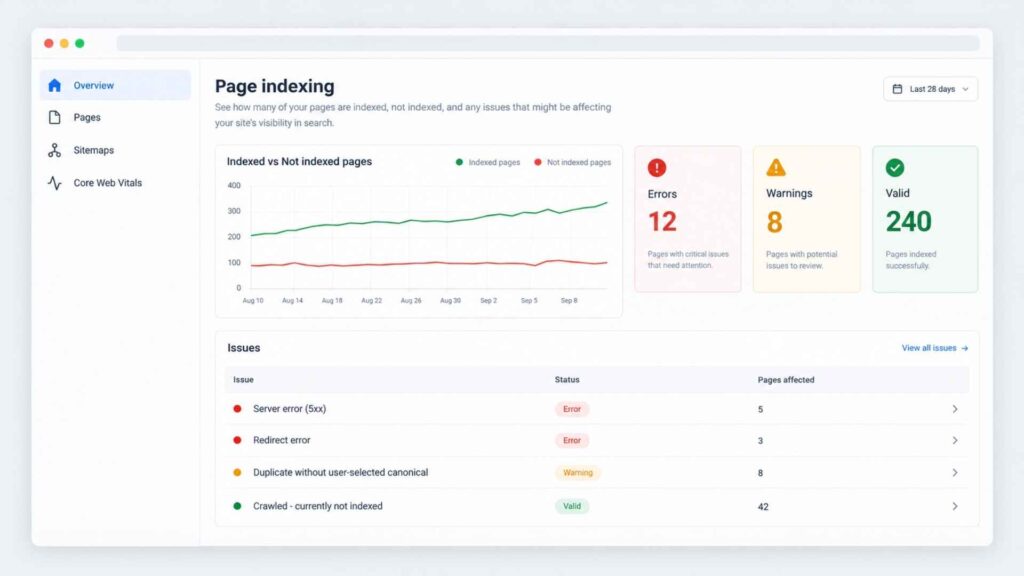
Can AI do technical SEO audits? Partly. Tools like Semrush and Ahrefs run a site audit that flags broken links, slow pages, duplicate titles, and redirect chains. AI then helps you prioritize the fixes and write the code.
Schema markup is a good example. Schema.org defines the vocabulary, and AI can generate the JSON-LD for FAQ, product, or article pages in seconds. Test it in Google’s Rich Results Test, because a broken snippet does nothing.
The fix: run a site audit before you publish your next ten posts. Fix crawl errors and indexing problems first, and connect Google Search Console so you can see what Google actually reports about your pages. Strong AI tools for website optimization cover speed, crawlability, and structured data as well as the words on the page.
Mistake 6: Paying for Overlapping Tools and Ignoring Free Plans
A beginner stack often includes one keyword tool, one writing tool, one optimizer, one rank tracker, and one audit tool. Many of these tools for SEO optimization do the same job.
Approximate starting prices as of [date]:
| Tool | Best for | Approx. entry price | Free option |
|---|---|---|---|
| Semrush | All-in-one research and audits | $139.95/month (Pro) | Limited free account |
| Ahrefs | Backlinks and keyword data | Around $129/month | Free webmaster tools |
| Surfer SEO | Content optimization | Around $99/month | None |
| Frase | Briefs and optimization | Around $45/month | Trial only |
| Clearscope | Enterprise content scoring | Around $189/month | None |
| ChatGPT / Claude | Drafting and clustering | Free tier, paid around $20/month | Yes |
Semrush also sells newer Semrush One plans that add AI visibility tracking at a higher price. Vendors change pricing often, so confirm each price on the vendor’s site before buying.
Free AI SEO tools are better than most people expect. Ahrefs offers free webmaster tools for backlink checks and site health, and Google Search Console costs nothing and shows your real queries and clicks.
The fix: start with one data tool, one language model, and Google’s free tools. Add a paid optimizer only after you have ten or more pages worth improving. Still comparing the big names? Read our breakdown of Semrush vs Ahrefs vs Moz vs Ubersuggest, or see these Ahrefs alternatives if cost is the issue.
Which tool fits which user?
- AI tools for SEO beginners: Google Search Console, Ahrefs free tools, and ChatGPT or Claude.
- Bloggers and writers: Frase or Surfer SEO for briefs and optimization.
- Freelancers: Semrush for client audits and competitor work.
- Small business owners: one all-in-one tool plus free Google tools.
- Agencies and SEO teams: Semrush or Ahrefs plus Clear scope or MarketMuse for large content programs.
Location matters when you pick a tool. Most major platforms have deep keyword databases for the US and UK. For Japan, check the vendor’s list of supported databases and Japanese-language data before you commit. If you make video content, SEO tools for YouTube such as vidIQ and TubeBuddy handle video keyword research better than general platforms.
Mistake 7: Not Tracking What Changed
Beginners install a tool, make 30 changes, and never measure anything. Three months later they can’t say what worked.
Reporting is where AI-powered SEO software earns its fee. Rank tracking shows whether positions move. Organic traffic and search visibility in Search Console show whether those positions turn into visits.
AI search adds a second layer. Google AI Overviews and chat-based answers now influence who gets mentioned, not only who gets ranked. Track whether your brand appears there. Our guides on how to rank in ChatGPT and the ChatGPT rank tracking tool explain how, and SEO vs GEO covers where search is heading.
The fix: record a baseline before you change anything. Note your top 20 pages, their positions, and monthly clicks. Check again in 30, 60, and 90 days.
Do AI tools improve Google rankings? They improve your speed and coverage. Rankings improve only when the content is also better, and no tool can promise that. Watch Google algorithm updates too, since a core update can move your pages no matter which tool you use.
How to Use AI Tools for SEO in 2026: A Simple Workflow That Avoids All Seven Mistakes
Run these steps for every new article.
- Define intent. Write the one question the reader wants answered.
- Research. Pull validated keywords from Semrush or Ahrefs.
- Cluster. Group them with ChatGPT or Claude.
- Build a content brief. Include headings, questions, entities, and competitor gaps. A content gap analysis against the top five results shows what they missed.
- Draft. Let AI produce a rough version, then rewrite it with your own examples.
- Optimize. Check on-page SEO and the content score, but don’t chase 100.
- Check. Fact-check, test schema, and run a site audit on the page.
- Publish and track. Log the baseline and review in 30 days.
For SERP analysis, open the top five results manually and note which format wins: guides, lists, or tools. AI tools for competitor analysis then add backlink analysis and keyword overlap. Combine both views, because the tool shows numbers and your eyes show intent.
Automation fits at steps 3, 6, and 8. Use AI tools for SEO automation for repeatable chores such as clustering, meta descriptions, and rank reports, and keep the judgment calls for yourself.
FAQs
What are the best AI tools for SEO?
Semrush and Ahrefs for data, Surfer SEO or Clear scope for content optimization, ChatGPT or Claude for drafting and clustering, and Google Search Console for free performance data.
Are AI tools for SEO worth it?
Yes, if you use them to save time on research and audits. No, if you expect them to replace strategy.
Can AI replace SEO?
No. It speeds up tasks, but someone still has to choose targets, judge quality, and understand the audience.
Does Google penalize AI content?
Google targets unhelpful, scaled content, not the use of AI itself.
What is the best free AI tool for SEO?
Start with Google Search Console plus a free ChatGPT or Claude account. Add Ahrefs free tools for backlink and keyword checks. These are the free AI tools for SEO most beginners need.
How much do AI SEO tools cost?
Free tiers exist for most. Paid plans typically start around $45 to $140 per month, and Semrush Pro is $139.95 per month.
I picked these six because they match the highest-volume searches and the main concerns of beginners: which tools, whether they’re worth it, risk, and cost. The other nine answers can stay in the article body or be dropped, since several (clustering, technical audits, keyword research) are already covered in the mistake sections.
Start With One Fix
The best AI SEO tools don’t rescue a weak strategy. They make a clear strategy faster and cheaper.
Pick one mistake from this list that applies to you today. Fix it this week, then track the result for 30 days.
Not sure which tool fits your site, budget, or team? Browse the guides on aiblitzo to compare options, then contact us for expert SEO, content, and digital marketing support.

2 Comments
Pingback: ChatGPT Rank Tracking Tool Guide 2026 | Best AI Visibility Tools
Pingback: Moonshot AI: 3 Mistakes New Users Make with Kimi