

On October 16, 2026, Reflection AI published the Beam weights on Hugging Face and gave developers a frontier-scale coding model that anyone can download, fine-tune, and self-host. Meanwhile, Anthropic sells Claude Sonnet 5.5 as a polished hosted API that scores near its own flagship on coding work. Therefore, this Reflection Beam vs Claude Sonnet 5.5 comparison matters for any team that is choosing between owning a model and renting one. In this guide, we compare specs, licenses, benchmarks, and pricing, because the right answer depends on your infrastructure as much as on raw scores. For example, our Flint coding model guide covered a laptop-class open release earlier this month, and Beam plays the same openness game at a far larger scale.
What Is Reflection Beam?
Reflection AI is a United States lab founded by former Google DeepMind researchers and backed by Nvidia. The company announced Beam on October 5, 2026, but it held the weights back for final red-teaming, and it released them on October 16. As a result, the Reflection Beam open weights arrived with a model card, final benchmarks, and a safety report on day one.
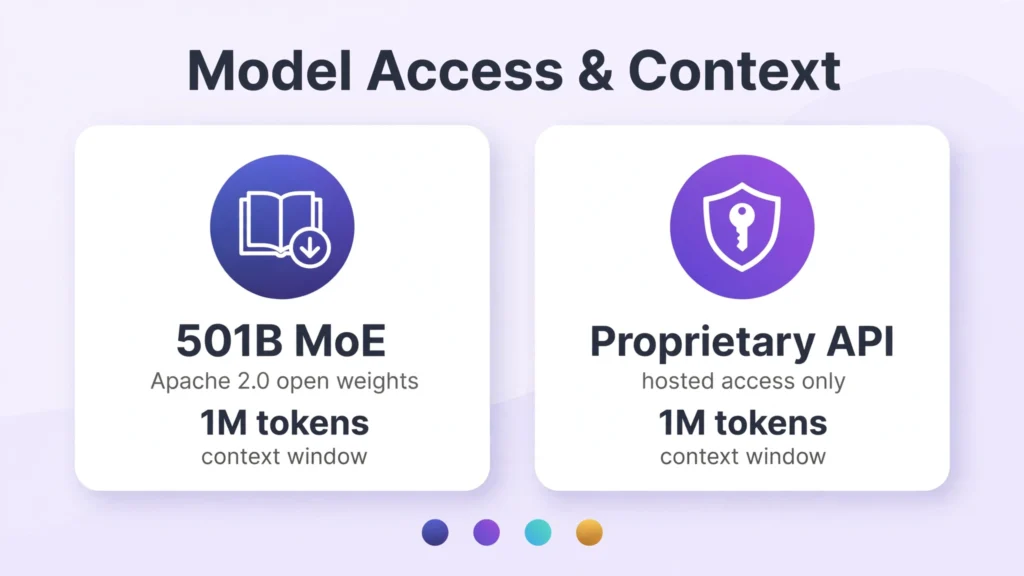
Beam is a sparse mixture-of-experts model with 501 billion total parameters and roughly 23 billion active per token. In addition, it offers a 1 million token context window, text-only input, and a June 30, 2026 knowledge cutoff. Reflection pretrained it on 23.8 trillion tokens and then ran reinforcement learning on 10,500 Nvidia GB300 chips. The weights ship in BF16, FP8, and NVFP4 formats, and a DFlash2 drafter speeds up generation through speculative decoding. Most importantly, the Apache 2.0 license allows commercial use, modification, and redistribution with no revenue caps. Hugging Face introduced Beam as a model that teams can own, customize, and scale on their own hardware.
What Is Claude Sonnet 5.5?
Anthropic released Claude Sonnet 5.5 on September 28, 2026, as the second model in its 5.5 family. Reuters covered the Sonnet 5.5 launch as a faster, lower-cost complement to the Opus 5.5 flagship. Sonnet 5.5 is a proprietary model, so Anthropic does not disclose its parameter count, and developers reach it only through APIs.
However, the hosted route removes every infrastructure burden. Sonnet 5.5 runs on the Claude API, Amazon Bedrock, Google Cloud, and Microsoft Foundry, and it plugs directly into Claude Code. It accepts a 1 million token context at standard rates and returns up to 128K output tokens, with flagship-grade cybersecurity safeguards and zero data retention options. Therefore, teams that want frontier coding quality without owning a GPU start here.
Reflection Beam vs Claude Sonnet 5.5: Specs and License Compared
The table below lines up the core facts, because architecture and licensing shape every later decision.
| Factor | Reflection Beam | Claude Sonnet 5.5 |
|---|---|---|
| Developer | Reflection AI | Anthropic |
| Released | Announced Oct 5, 2026; weights Oct 16, 2026 | September 28, 2026 |
| Parameters | 501B total, about 23B active (MoE) | Not disclosed |
| Context window | 1M tokens | 1M tokens, 128K max output |
| License and access | Apache 2.0 open weights, self-host or hosted | Proprietary, API only |
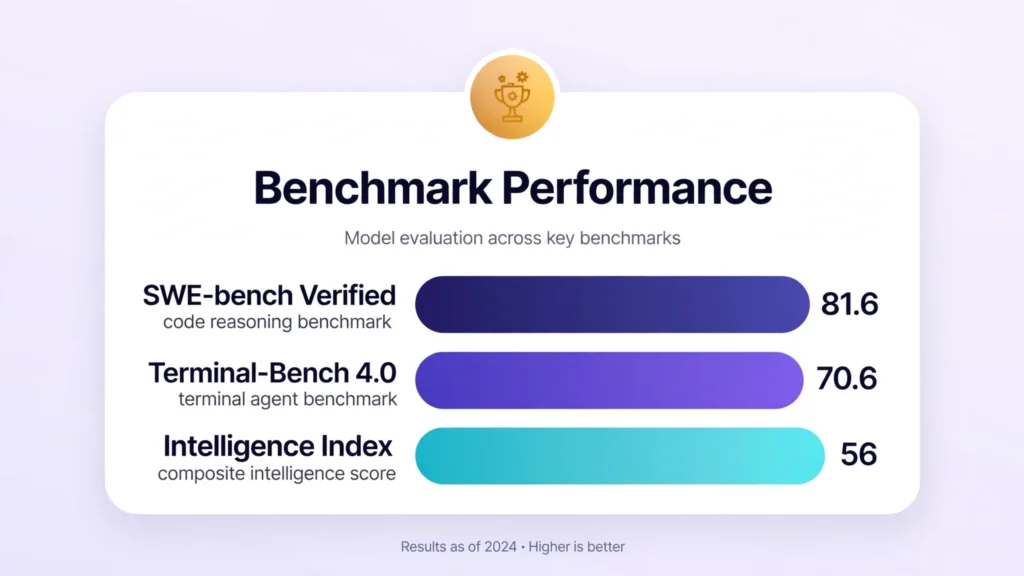
| SWE-bench | 81.6% Verified (vendor reported) | 81.3% on SWE-Bench Pro (vendor reported) |
| Terminal-Bench | 80.1% on version 2.1 (vendor reported) | 70.6% on version 4.0 (vendor reported) |
| AA Intelligence Index | Not yet listed | 56, second only to Opus 5.5 |
| Token price per 1M | From $0.25 input, $1.00 output via hosted providers | $2 input, $10 output |
| Agent tooling | Mirror CLI, open source | Claude Code |
| Best for | Self-hosting, fine-tuning, data control | Zero-ops API access, knowledge work |
On paper, the two models tie on context length, but they split sharply on ownership. Beam hands you the weights under Apache 2.0, while Sonnet 5.5 hands you an endpoint and a bill. In contrast, Sonnet 5.5 carries independent validation that Beam still lacks. Artificial Analysis has tested Sonnet 5.5 and has not yet listed Beam.
Benchmark Results: What the Reflection Beam vs Claude Sonnet 5.5 Scores Actually Say
Firstly, a warning: both labs report their own numbers, and the suites differ, so treat every figure as a claim rather than a settled fact. Reflection reports 81.6% on SWE-bench Verified for the BF16 checkpoint, plus 97.7% on AIME 2026 and 90.5% on GPQA Diamond. However, no independent lab has replicated those results yet. On the other hand, Anthropic reports 70.6% on Terminal-Bench 4.0 for Sonnet 5.5, which beats Opus 5.5 at 66.4% and crushes Sonnet 5 at 10.3%. Anthropic also reports 81.3% on SWE-Bench Pro and 55.5% on CursorBench 4.0.
The Terminal-Bench rows in the table need care, because Beam reports 80.1% on Terminal-Bench 2.1 while Sonnet 5.5 reports 70.6% on the newer 4.0 suite. Therefore, those two numbers do not settle the head-to-head question. Meanwhile, Artificial Analysis gives Sonnet 5.5 a 56 on its Intelligence Index, second only to Opus 5.5, and its own Terminal-Bench run still placed Sonnet 5.5 ahead of Opus 5.5. In addition, Artificial Analysis found a cost catch. At maximum effort, Sonnet 5.5 burned about 193K output tokens per task and cost roughly $7.60 per task. Reflection built Beam for exactly that weakness, because it trained the model with a length penalty and claims matching quality with roughly three times fewer reasoning tokens.
Beam vs GLM-5.3: The Open-Weight Rival
Beam does not chase Sonnet alone, because the Beam vs GLM-5.3 contest decides the open-weight crown. Z.ai released GLM-5.3 in August 2026 with about 753B parameters, a 1M token context, and strong agent scores such as 66.9 on DeepSWE v1.1. However, GLM-5.3 ships under a custom license with extra conditions for very large API businesses, while Beam uses clean Apache 2.0 terms. In addition, NIST evaluators rated GLM-5.3 as the most cyber-capable open model they had tested. Anyone hunting the best open weight coding model should benchmark Beam and GLM-5.3 on their own repositories, because vendor charts favor the home team every time.
Reflection Beam vs Claude Sonnet 5.5: The Mirror Coding Agent and the Claude Code Ecosystem
Reflection ships more than weights, because the Mirror coding agent arrives in the same release. Mirror is an open source, Rust-based harness that Reflection built alongside Beam, and it drives the model through terminal tasks, tool calls, and long sessions. Similarly, day-0 support in Transformers, vLLM, and SGLang means teams can serve Beam behind an OpenAI-compatible endpoint immediately.
Sonnet 5.5 answers with maturity instead of openness. Claude Code already sits inside thousands of engineering workflows. Sonnet 5.5 also ships through Bedrock, Google Cloud, and Microsoft Foundry with enterprise controls. In contrast, Mirror is days old, so its community, plugins, and battle testing still trail far behind. Therefore, ecosystem depth favors Anthropic today, while ecosystem ownership favors Reflection for teams that want to inspect and modify every layer.
Reflection Beam vs Claude Sonnet 5.5 Pricing: Hosted Tokens, Self-Hosting, and Total Cost
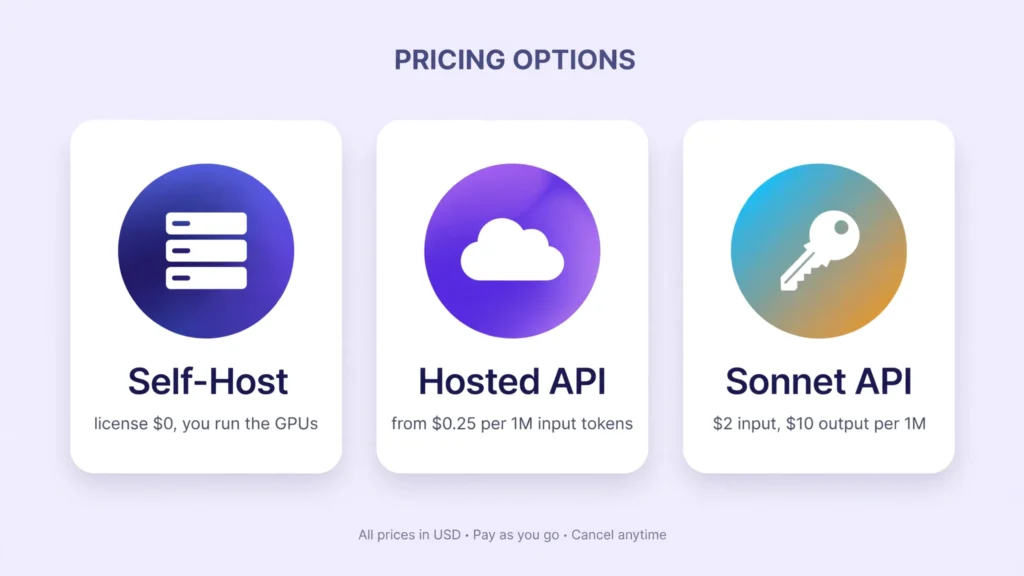
Beam AI model pricing starts at zero, because the weights cost nothing to download. However, self-hosting is not free in practice: Reflection says the FP8 and NVFP4 checkpoints fit on a single eight-GPU server, while the full BF16 version needs tens of GPUs. Therefore, Beam is a data-center model, not a laptop model. Hosted routes remove that barrier, and prices already fell fast: Baseten lists Beam at $0.40 per million input tokens and $1.20 per million output tokens, down from its $1.30 and $4.30 day-0 listing, and OpenRouter routes start at $0.25 input and $1.00 output.
Claude Sonnet 5.5 pricing holds steady at $2 per million input tokens and $10 per million output tokens, with cache reads at $0.20 and Batch API rates at $1 and $5. That sticker price is exactly half of Opus 5.5, and Anthropic says Sonnet 5.5 finishes tasks with fewer tokens, so cost per task drops by up to 30% versus Sonnet 5. In contrast, the Artificial Analysis measurement above shows that maximum effort can erase that saving, so effort settings decide your real bill. For broader market context, our Mercury 3 guide shows how aggressively the fast, cheap tier now prices tokens.
Reflection Beam vs Claude Sonnet 5.5 Verdict: Which Model Should You Choose?
The Reflection Beam vs Claude Sonnet 5.5 decision comes down to one question: do you want to own the model, or do you want to rent the result? Choose Beam if your team runs GPU infrastructure, handles code that cannot leave your network, or plans to fine-tune on a private codebase. In addition, high-volume agent workloads reward Beam, because self-hosting converts a growing per-token bill into a fixed infrastructure cost. Choose Sonnet 5.5 if you need frontier coding quality today with zero operations and validated benchmarks. Finally, our verdict is simple: Sonnet 5.5 wins for most teams right now, but Beam wins for teams with infrastructure, strict data rules, and the patience to validate vendor benchmarks on their own code.
Frequently Asked Questions
What is Reflection Beam?
Beam is Reflection AI’s first open-weight model, a 501B mixture-of-experts system built for coding and agentic work. Reflection announced it on October 5, 2026, and released the weights on Hugging Face on October 16, 2026.
Are the Reflection Beam open weights free for commercial use?
Yes. The Reflection Beam open weights ship under the Apache 2.0 license, so companies can use, modify, and redistribute the model commercially with no license fee and no revenue cap.
How much does Beam cost to run?
Beam AI model pricing depends on the route you choose. Self-hosting costs only your GPU infrastructure, hosted APIs on Baseten run $0.40 input and $1.20 output per million tokens, and OpenRouter routes start at $0.25 and $1.00.
What is Claude Sonnet 5.5 pricing?
Claude Sonnet 5.5 pricing is $2 per million input tokens and $10 per million output tokens. In addition, cache reads cost $0.20 per million, and the Batch API halves the main rates to $1 and $5.
Which model scores higher, Reflection Beam vs Claude Sonnet 5.5?
The suites differ, so no single winner exists yet. Beam reports 81.6% on SWE-bench Verified, while Sonnet 5.5 reports 70.6% on the newer Terminal-Bench 4.0 and holds an independent Intelligence Index score of 56.
What is the Mirror coding agent?
The Mirror coding agent is Reflection’s open source, Rust-based CLI harness that ships with Beam. It runs the model through terminal tasks and tool calls, and it gives self-hosters a ready-made agent workflow on day one.
Beam vs GLM-5.3: which open model leads?
Beam vs GLM-5.3 is close: GLM-5.3 is larger at about 753B parameters and carries strong independent cyber evaluations, while Beam offers a cleaner Apache 2.0 license and token efficiency. Benchmark both on your own code first.
Can Beam run on a laptop?
No. Even the compressed FP8 and NVFP4 checkpoints need a single eight-GPU server, and the full BF16 weights need tens of GPUs. Therefore, most developers should start with a hosted API instead.
What is the best open weight coding model right now?
The best open weight coding model depends on your priorities: Beam leads on licensing and efficiency claims, GLM-5.3 leads on independent cyber testing, and Kimi K3 leads on some reasoning charts. Your own repository tests should make the final call.
Is Sonnet 5.5 better than Opus 5.5?
On Terminal-Bench 4.0, yes: Sonnet 5.5 scores 70.6% against 66.4% for Opus 5.5, at half the token price. However, Anthropic itself says Opus 5.5 remains stronger on complex, open-ended work that needs sustained judgment.
Conclusion
Overall, this Reflection Beam vs Claude Sonnet 5.5 matchup captures the industry’s central split in October 2026. Beam proves that an open Apache 2.0 model can post frontier coding numbers, while Sonnet 5.5 proves that a hosted API can match a flagship on terminal work at half the flagship price. Therefore, rent Sonnet 5.5 when you need results today, and adopt Beam when ownership, privacy, and long-run cost matter more. Either way, test both on your own repository, because your codebase is the only benchmark that never lies.